
What Makes a Veteran Program Actually Work? The Science Behind Effective Design
Equipped to Thrive.
There are thousands of veteran-serving nonprofits in the United States. They range from massive national organizations to small local groups, from clinical treatment centers to outdoor adventure programs, from employment services to family support networks.
They all want to help veterans. Most are led by people with genuine commitment to the mission. Many have compelling stories, professional websites, and heartfelt testimonials.
But here's the uncomfortable question that rarely gets asked: Do they actually work?
Not "do they provide services" or "do veterans attend" or "do participants report satisfaction." But do they produce measurable, lasting change in veterans' lives? Do their programs actually help veterans thrive—not just for a week or a month, but for years afterward?
For donors who want their investment to create real impact, this question matters more than any star rating, overhead ratio, or inspiring video. And answering it requires understanding what separates programs that work from programs that merely exist.
The science of program effectiveness isn't mysterious. Decades of research on human development, behavior change, and trauma recovery have identified clear principles that distinguish effective interventions from ineffective ones. The challenge is that many veteran programs—even well-intentioned ones—don't incorporate these principles into their design.
Understanding these principles helps donors ask better questions, identify more effective organizations, and ultimately direct their resources toward programs that actually deliver on their promises.
The Duration Problem
Perhaps no factor more reliably predicts program effectiveness than duration. And perhaps no factor is more commonly ignored.
The appeal of short-term interventions is obvious. They're easier to fund, simpler to staff, and produce quick results that can be photographed and shared. A weekend retreat generates immediate testimonials. A single therapy session can provide a breakthrough moment. A one-day event creates smiling faces and heartwarming stories.
But lasting change in human beings doesn't happen in days. The neural pathways that govern behavior, emotion regulation, and self-concept are built through repetition over time. The patterns that veterans developed through years of military service—and the challenges that emerged from combat exposure—don't rewire themselves in a weekend.
What Research Shows About Duration
Studies on behavior change consistently find that sustained interventions outperform brief ones. Whether the outcome is physical health, mental health, skill development, or habit formation, programs that engage participants over months show dramatically better results than those that last days or weeks.
This isn't surprising when you consider how change actually works. New behaviors need to be practiced repeatedly until they become automatic. New ways of thinking need reinforcement as old thought patterns try to reassert themselves. New skills need application in varied contexts to become truly integrated.
For veterans dealing with post-traumatic stress (PTS), the duration factor is especially critical. The hypervigilance, emotional numbing, and reactive patterns that characterize PTS developed over extended periods of intense experience. They won't dissolve in a single powerful weekend—no matter how transformative that weekend feels in the moment.
Researchers call this the "vacation effect." People often feel dramatically better immediately after an intensive experience, but those gains fade as they return to normal life. Without sustained engagement, the powerful feelings generated by a retreat or workshop gradually give way to established patterns.
What Effective Duration Looks Like
Effective veteran programs build in sustained engagement—not as an afterthought, but as a core design element. They recognize that the initial experience, however powerful, is just the beginning. The real work happens in the months that follow, as veterans integrate new insights into daily life.
This might take different forms: ongoing cohort meetings, regular check-ins with facilitators, structured curriculum delivered over time, or skill-development practices that continue independently. The specific format matters less than the commitment to duration itself.
At Warriors & Quiet Waters, our Built for More program (warriorsandquietwaters.org/built-for-more) spans six to twelve months. The Initial Experience—five days of immersive programming in Montana—creates powerful momentum. But then comes the Discovery Phase: months of continued engagement with cohort members and facilitators, working through structured content while developing skills independently. The Capstone Experience brings cohorts back together, celebrating and cementing the transformation that has occurred.
This extended timeline isn't a luxury—it's essential to the program's effectiveness. Without it, even the most powerful initial experience would fade.
The Engagement Depth Problem
Duration alone isn't enough. A program could theoretically engage veterans for years while producing minimal impact—if that engagement lacks depth.
Depth of engagement refers to how fully participants are involved in the change process. Surface-level engagement—attending an event, receiving information, participating passively—produces surface-level results. Deep engagement—actively practicing new skills, confronting challenging material, building genuine relationships—produces deep results.
Active vs. Passive Participation
Educational research has long distinguished between passive and active learning. Passive learning—listening to lectures, watching videos, reading materials—transfers information but rarely changes behavior. Active learning—practicing skills, solving problems, applying concepts—creates lasting capability.
The same principle applies to veteran programs. A veteran who passively attends a support group, listening but rarely engaging, will gain less than one who actively participates—sharing experiences, trying suggested techniques, bringing challenges back to the group.
Effective programs design for active engagement. They give veterans things to do, not just things to hear. They create structures that require participation rather than merely allowing it. They build in accountability that makes engagement the norm rather than the exception.
Skill Development as Engagement
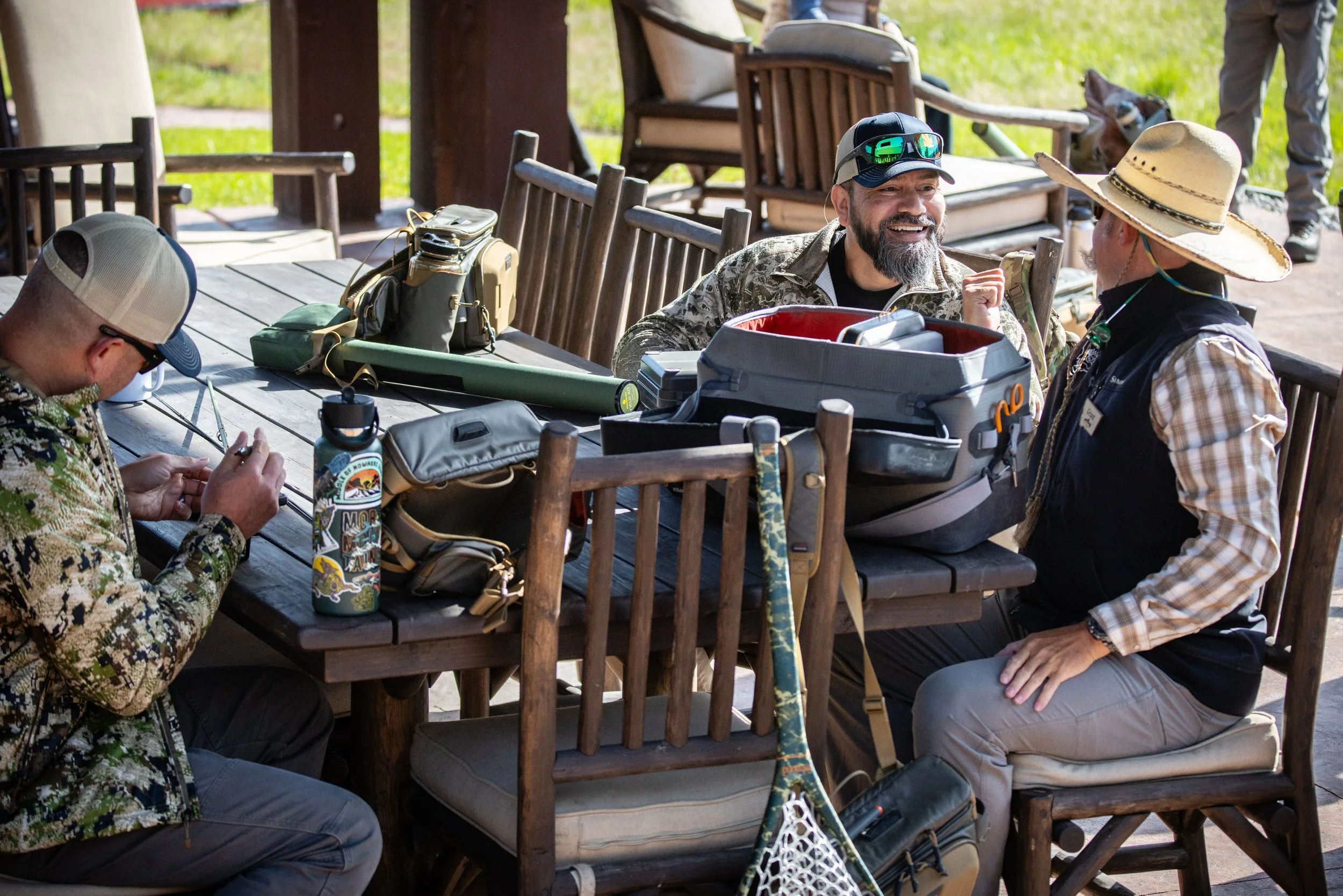
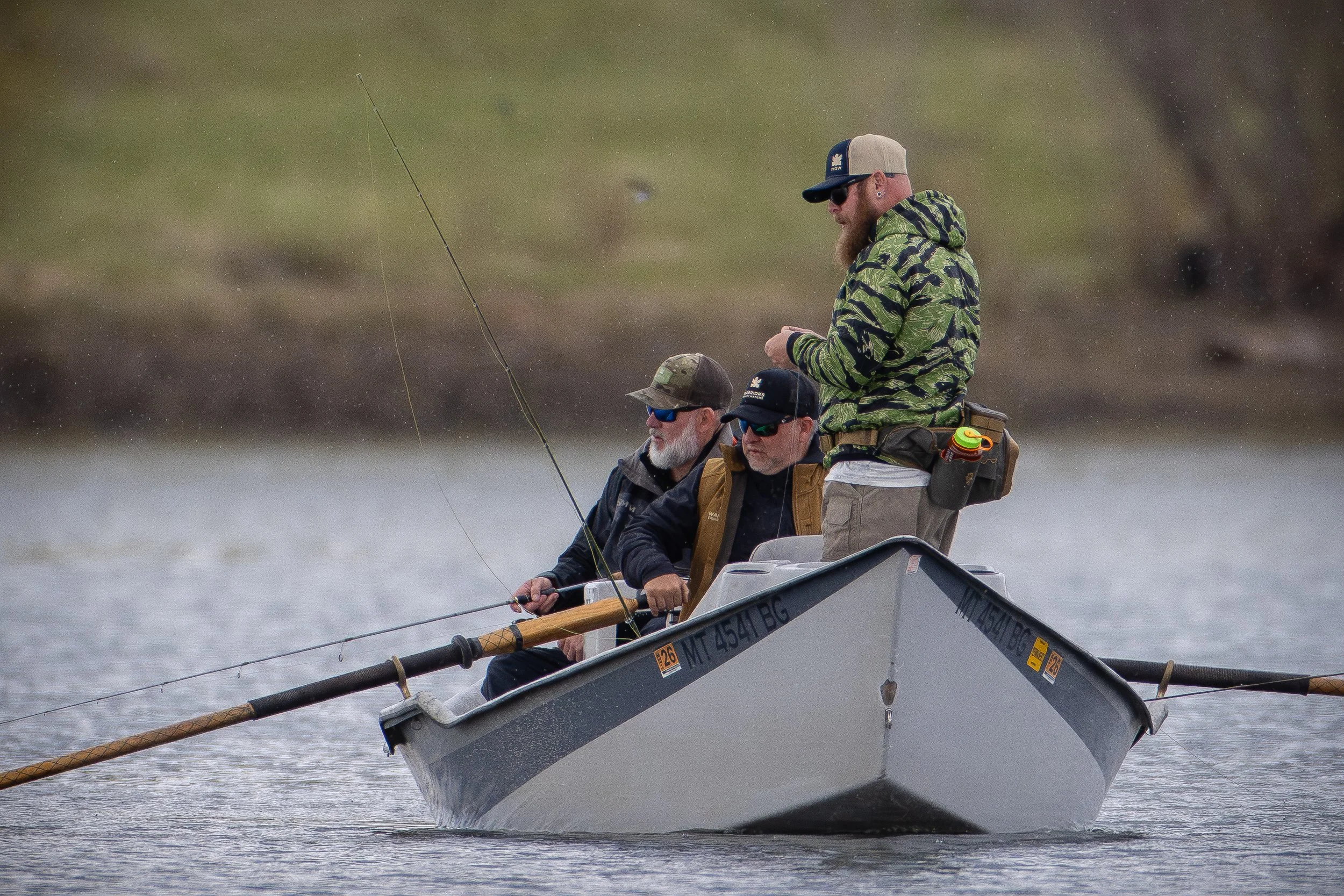
One powerful way to ensure deep engagement is through skill development. Learning a challenging new skill—whether fly fishing, archery hunting, or photography—demands active participation. You can't passively learn to cast a fly rod or track game through terrain or compose a compelling photograph.
The skill itself becomes a vehicle for deeper work. As veterans struggle with the technical challenges, they practice persistence. As they experience small successes, they rebuild confidence. As they continue developing independently, they demonstrate to themselves that growth is possible.
This is why experiential programs—when well-designed—can outperform purely talk-based interventions. The experience provides a structure for engagement that lectures and discussions alone cannot match. Veterans are doing, not just listening. And in the doing, they change.
Warriors & Quiet Waters designs for deep engagement. Our three tracks—fly fishing, hunting, and photography—each provide challenging skill-development experiences that demand active participation while creating opportunities for personal growth. Learn about our Built for More program → warriorsandquietwaters.org/built-for-more
The Evidence Problem
Here's a troubling reality: most veteran programs don't know whether they work.
They know how many veterans they serve. They know what activities they provide. They collect testimonials from satisfied participants. But they don't systematically measure whether veterans' lives actually improve—and whether those improvements persist over time.
This isn't because program leaders don't care. It's because rigorous outcome measurement is hard. It requires baseline assessments before the program begins, follow-up measurement after completion, validated instruments that capture meaningful change, and honest analysis of what the data shows—even when results disappoint.
The Difference Between Outputs and Outcomes
Most programs measure outputs: veterans served, sessions delivered, events conducted. These numbers are easy to track and impressive in annual reports. "We served 5,000 veterans last year" sounds like success.
But outputs tell you nothing about outcomes—the actual changes in veterans' lives. A veteran can be "served" by attending a single event without experiencing any meaningful improvement. High output numbers can mask a complete absence of real impact.
Outcomes are harder to measure but infinitely more important. Did veterans' sense of purpose increase? Did their resilience improve? Are they thriving months after completing the program, or did initial gains fade? These questions require serious measurement—and a willingness to be held accountable for the answers.
The Value of Third-Party Verification
Self-reported outcomes are better than no outcome measurement at all. But there's an inherent conflict of interest when organizations evaluate their own effectiveness. The most credible evidence comes from independent, third-party evaluation.
Third-party evaluation means an outside entity—typically academic researchers—designs the assessment, collects the data, and analyzes the results. The organization being evaluated doesn't control the methodology or the conclusions. If the program doesn't work, the evaluation will show it.
This level of accountability is rare in the nonprofit sector. It requires organizations to invite scrutiny, accept findings they might not like, and commit resources to evaluation that could otherwise go directly to programming. But it's the only way to truly know whether a program works—and to demonstrate that effectiveness credibly to donors.
At Warriors & Quiet Waters, our outcomes are independently evaluated by Syracuse University's Institute for Veterans and Military Families (warriorsandquietwaters.org/our-impact). We don't design the assessment or analyze the results—we submit to genuine accountability. And the findings speak for themselves: 4x improvement in sense of purpose, 4x improvement in resilience, 2x increase in overall thriving, measured months after program completion.
The Philosophy Problem
Underlying every veteran program is a philosophy—a set of assumptions about what veterans need and how change happens. These assumptions shape everything from program design to facilitator training to how veterans are described in marketing materials.
Some philosophies are more effective than others. And some, however well-intentioned, can actually undermine veteran wellbeing.
Deficit-Based vs. Strength-Based Approaches
Many veteran programs operate from a deficit-based philosophy: veterans are broken, damaged, or disordered, and programs exist to fix them. This approach focuses on what's wrong—symptoms to be treated, problems to be solved, dysfunction to be corrected.
The deficit-based approach has intuitive appeal. Veterans are struggling; programs should address that struggle. But research increasingly suggests that strength-based approaches—which focus on building capability rather than fixing deficits—produce better outcomes.
Strength-based programs start from a different assumption: veterans are capable adults with enormous potential, facing real challenges that require support. They're not broken—they're adapting to difficult circumstances with the tools they currently have. The program's job isn't to fix them, but to help them develop new tools, discover new strengths, and realize potential that may have been obscured by struggle.
This philosophical difference shapes everything. Deficit-based programs often feel clinical—assessments, diagnoses, treatment plans. Strength-based programs feel developmental—challenges, growth, mastery. Veterans in deficit-based programs are patients. Veterans in strength-based programs are participants, learners, leaders in their own transformation.
Treatment vs. Development
Related to the deficit/strength distinction is the difference between treatment and development models. Treatment models aim to reduce pathology—to move veterans from sick to well, from dysfunctional to functional. Development models aim to build capacity—to move veterans from wherever they are toward greater thriving.
Treatment has its place. Veterans with acute mental health crises need clinical intervention. But many veterans don't need treatment in the clinical sense—they need development. They need to rediscover purpose, rebuild confidence, reconnect with community, and develop new skills for thriving in civilian life.
Development-focused programs often produce results that treatment alone cannot achieve. They don't just reduce symptoms—they build positive capacities. Veterans don't just feel less bad; they feel more alive, more purposeful, more capable. The goal isn't returning to baseline; it's reaching new heights.
At Warriors & Quiet Waters, we believe veterans were "built for more"—not built to be fixed. Our programs are explicitly developmental, focused on helping veterans discover purpose, build resilience, and develop mastery. We don't treat veterans as patients. We treat them as people with enormous capacity, ready to grow.
Our independently verified outcomes demonstrate the power of strength-based, developmental programming: 4x improvement in resilience, 4x improvement in sense of purpose, and 2x increase in overall thriving. These aren't symptom reductions—they're genuine gains in human flourishing. See our verified impact data → warriorsandquietwaters.org/our-impact
The Integration Problem
Even programs with appropriate duration, deep engagement, evidence-based design, and effective philosophy can fail if they don't address integration—helping veterans connect their program experience to their actual lives.
A veteran can have a transformative week, return home inspired, and then watch that transformation dissolve as daily life reasserts itself. Without deliberate integration support, program gains often don't persist.
Bridging the Gap
Effective programs build bridges between the program environment and real life. They help veterans think through how insights from the program apply to their specific circumstances. They provide tools and practices that veterans can use independently. They create accountability structures that support follow-through.
This might include action planning—helping veterans identify specific changes they'll make and how they'll implement them. It might include peer accountability—cohort members checking in with each other on commitments. It might include ongoing skill practice—continuing to develop program-introduced skills in daily life.
The key is that integration is designed into the program rather than left to chance. Veterans leave not just with memories of a good experience, but with concrete plans, tools, and support for maintaining and extending their growth.
The Role of Community
One of the most powerful integration supports is community—ongoing connection with others who share the program experience. Veterans who remain connected to their cohort have built-in accountability partners, people who understand their journey and can support their continued growth.
This is why cohort-based programs often outperform individual interventions. The community formed during the program persists afterward, providing ongoing support that no staff could deliver at scale. Veterans support each other, celebrate each other's progress, and help each other through challenges.
At Warriors & Quiet Waters, cohort connection is central to our model. Veterans go through the entire Built for More journey together—Initial Experience, Discovery Phase, and Capstone—forming bonds that persist long after the formal program ends. Our alumni network (warriorsandquietwaters.org/alumni) extends this community further, connecting veterans across cohorts in a network of mutual support.
A Framework for Evaluation
Understanding what makes programs effective gives donors a framework for evaluating any veteran organization. Before investing, consider asking:
Duration: How long does the program engagement last? Programs measured in months are more likely to produce lasting change than those measured in days. Ask specifically about sustained engagement beyond any initial intensive experience.
Depth: What does participation actually involve? Programs requiring active engagement—skill development, challenging work, genuine participation—outperform those where veterans are passive recipients. Ask what veterans actually do during the program.
Evidence: Does the organization measure outcomes, not just outputs? Do they know whether veterans' lives actually improve? Is that measurement conducted or verified by an independent third party? Ask for outcome data, not just participation numbers.
Philosophy: How does the organization talk about veterans? Strength-based language—potential, growth, mastery—suggests a developmental approach. Deficit-based language—broken, damaged, disorder—may indicate a less effective treatment-focused model.
Integration: What happens after the program ends? Organizations that provide ongoing support, community connection, and integration resources help veterans maintain and extend their gains. Ask about post-program engagement.
These questions won't guarantee that a program is effective. But they'll help you identify programs that at least incorporate the principles that research shows matter most.
Investing in What Works
Donors face a choice: invest in programs that feel good or invest in programs that actually work. The two aren't always the same.
Programs that feel good offer immediate emotional payoff—dramatic stories, inspiring images, quick results. Programs that work may be less photogenic—sustained engagement over months doesn't compress well into a thirty-second video—but they produce the lasting transformation that donors ultimately want to create.
At Warriors & Quiet Waters, we've built our program on the principles that research shows matter: duration measured in months, deep engagement through challenging skill development, evidence-based design with third-party verification, strength-based philosophy focused on development rather than treatment, and robust integration support through cohort community and ongoing engagement.
This approach is more demanding than alternatives—for us and for the veterans we serve. It requires more resources, more time, and more commitment. But it produces results that justify the investment: veterans who don't just feel better temporarily, but who genuinely thrive long-term.
When you invest in Warriors & Quiet Waters, you're not just supporting a veteran organization. You're investing in evidence-based programming that demonstrably works. You're funding the sustained engagement, deep experiences, and ongoing support that create lasting transformation. And you're enabling veterans to become equipped to thrive—not just for a week, but for a lifetime.
Because veterans deserve programs that actually work—and donors deserve to know their investment makes a real difference.
Ready to invest in evidence-based veteran transformation? Your support funds the sustained programming, rigorous evaluation, and ongoing community that create lasting change. See our verified outcomes → warriorsandquietwaters.org/our-impact | Make a gift today → warriorsandquietwaters.org/donate