
The Psychology of Mastery: How Learning Fly Fishing, Hunting, and Photography Rebuilds Veteran Confidence
Equipped to Thrive.
In the military, competence wasn't optional—it was survival. Every service member learned to master complex skills under pressure: weapons systems, tactical maneuvers, communication protocols, leadership under fire. That mastery became part of their identity. They knew they were capable because they had proven it, again and again.
Then came the transition to civilian life. And for many veterans, something unexpected happened: that bedrock sense of competence began to erode.
The skills that made them exceptional in uniform don't always translate directly to civilian contexts. The clear metrics of military success—rank, qualifications, mission accomplishment—give way to ambiguous civilian measures. The identity built on proven capability starts to feel uncertain. And slowly, the confidence that once felt unshakeable begins to crack.
This isn't weakness. It's a natural response to losing the proving grounds where competence was constantly demonstrated and reinforced.
At Warriors & Quiet Waters, we've discovered something powerful about rebuilding that confidence: it happens through mastery. Not by talking about capability, but by developing it. Not by remembering past competence, but by creating new proof of present ability.
That's why our Built for More program centers on learning challenging new skills—fly fishing, hunting, or photography. The specific skill matters less than what the learning process awakens: the veteran's fundamental belief in their own capacity to grow, adapt, and succeed.
The Science of Self-Efficacy
Psychologist Albert Bandura spent decades studying what he called "self-efficacy"—a person's belief in their ability to succeed in specific situations and accomplish tasks. His research revealed something crucial: self-efficacy isn't just a nice feeling. It's a fundamental driver of human behavior and wellbeing.
People with high self-efficacy approach challenges as opportunities rather than threats. They set ambitious goals and commit to them. They recover more quickly from setbacks. They persist when things get difficult. In contrast, people with low self-efficacy tend to avoid challenges, give up quickly, and focus on their deficiencies rather than their potential.
Here's what makes Bandura's work especially relevant for veterans: self-efficacy isn't a fixed trait. It can be built—or rebuilt—through specific experiences. And the most powerful source of self-efficacy is what Bandura called "mastery experiences": successfully completing challenging tasks through one's own effort.
Not praise. Not positive thinking. Not being told you're capable. Actually doing something difficult and succeeding.
This is why simply telling veterans they're capable doesn't rebuild confidence. Words bounce off the surface. But when a veteran who doubted themselves lands their first trout on a fly rod they tied themselves, or tracks and harvests an elk through their own skill, or captures an image that genuinely moves people—something shifts at a deeper level. The proof isn't in someone else's encouragement. It's in their own hands.
The Confidence-Competence Loop
Mastery experiences create what researchers call a "confidence-competence loop." It works like this: Successfully completing a challenge builds confidence. That increased confidence makes you more willing to attempt the next challenge. Attempting more challenges builds more competence. More competence leads to more success, which builds more confidence.
The loop can spiral upward—or downward. Veterans who avoid challenges because they doubt themselves miss opportunities to prove their capability, which reinforces their doubt. But veterans who push through initial uncertainty and experience success begin rebuilding the upward spiral that military service once provided.
The key is creating conditions where that first success becomes possible. The challenge needs to be real—genuine difficulty that requires genuine effort. But it also needs to be achievable with proper support and instruction. Too easy, and success proves nothing. Too hard, and failure reinforces doubt.
This is the delicate balance that effective programming must strike. And it's why the choice of skill—and the quality of instruction—matters so much.
Three Paths to Mastery
At Warriors & Quiet Waters, veterans choose one of three tracks for their Built for More journey: fly fishing, hunting, or photography. Each offers a distinct path to mastery, with unique challenges and rewards. But all three share the essential elements that make skill acquisition therapeutic: they're genuinely difficult, deeply engaging, and provide clear feedback on progress.
Fly Fishing: Precision, Patience, and Presence
Fly fishing looks simple from the outside. A person stands in a river, casts a line, and waits for a fish. How hard could it be?
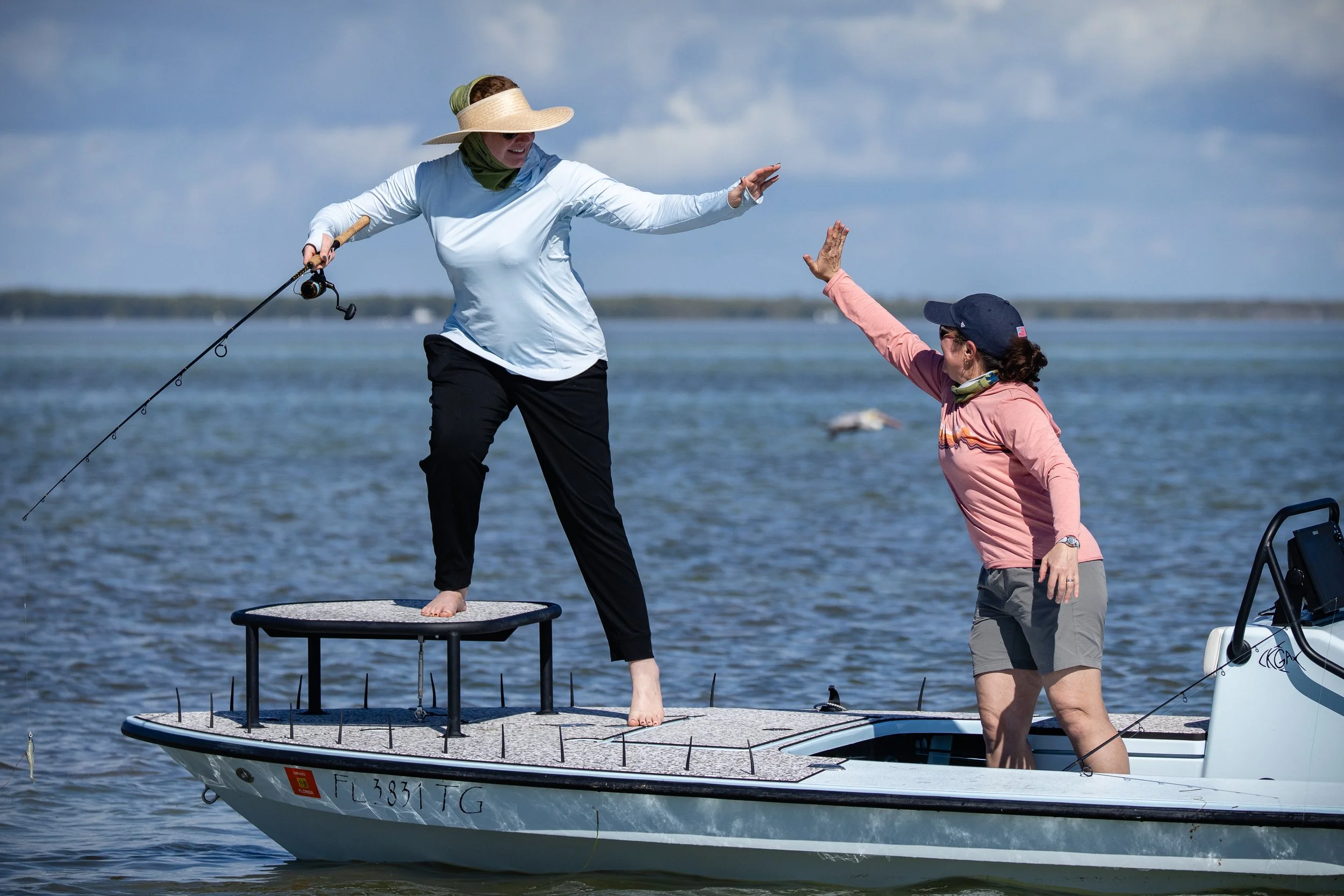
Veterans who enter our fishing track quickly discover the depth beneath that surface simplicity. Fly fishing demands mastery across multiple domains: understanding insect life cycles to select the right fly, reading water to identify where fish hold, developing the precise motor control for an effective cast, managing line and drift to present the fly naturally, and responding correctly when a fish strikes.
Each element requires learning. Each presents opportunities for failure and success. And each provides immediate, unambiguous feedback—the fish either takes the fly or it doesn't.
But fly fishing offers something beyond technical mastery. The sport demands presence. A mind wandering to past regrets or future anxieties will miss the subtle take. The rhythm of casting becomes almost meditative. Veterans often describe reaching a state of flow—complete absorption in the present moment—that provides relief from the hypervigilance and rumination that can follow combat service.
Standing in a river, surrounded by Montana's stunning landscapes, focused entirely on the water and the cast—veterans find a rare kind of peace. And when they feel the electric pulse of a trout taking their fly—a fly they selected based on their own observation, presented with a cast they've been practicing, in a spot they read correctly—the confidence that surges isn't borrowed. It's earned.
Hunting: Challenge, Discipline, and Connection
Our hunting track offers a different kind of mastery experience—one that often resonates deeply with veterans who thrived on physical and mental challenge during their service.
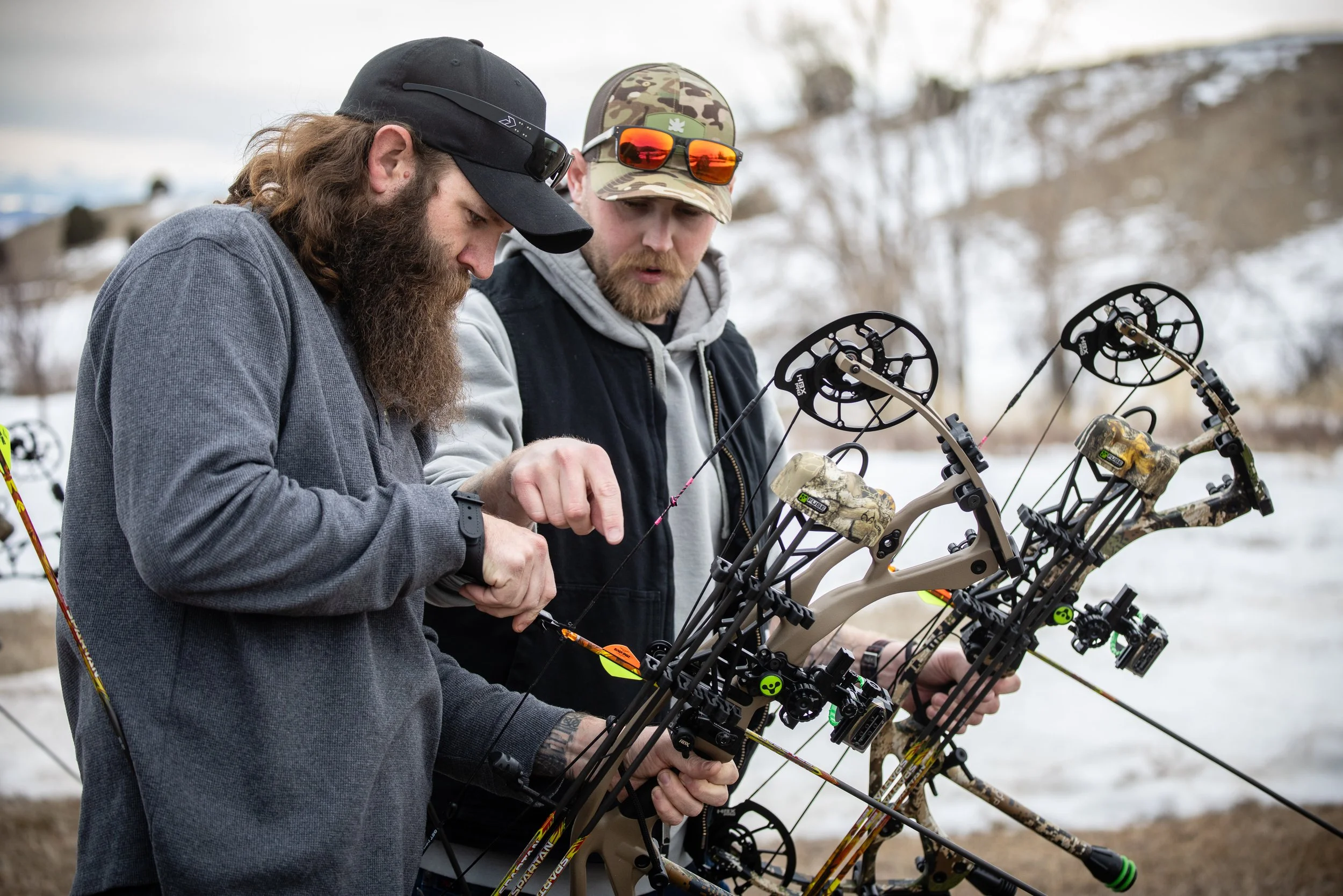
Archery hunting, which our program emphasizes, requires an exceptional combination of skills. Physical conditioning to cover difficult terrain. Patience to wait for the right opportunity, sometimes for days. Marksmanship with a bow, which demands even more precision than firearms. Animal behavior knowledge to predict movement patterns. Tracking skills to read sign. And the mental discipline to manage adrenaline when the moment finally arrives.
For many veterans, this combination feels familiar—not because they've hunted before, but because it echoes the integrated skill demands of military operations. The planning, the physical challenge, the need for both patience and decisive action, the high stakes of the critical moment. Hunting provides a constructive channel for capabilities that may have felt purposeless since leaving service.
The hunting track also involves a deeper confrontation with self. Hours of solo time in nature, waiting and watching, create space for reflection that modern life rarely provides. Veterans process experiences they've carried for years. The silence of the wilderness holds what the noise of daily life drowns out.
As one hunting track participant described his experience: "After I got out of the military, I hit the lowest point in my life. I lost my purpose, identity, confidence, and worth. Now more than ever, I see a path ahead to success and fulfillment with a clear way forward."
When the hunt succeeds—when weeks of preparation culminate in a clean, ethical harvest—the accomplishment reverberates. This isn't a participation trophy. It's proof of capability at the highest level, in one of humanity's oldest and most demanding pursuits.
Photography: Vision, Creativity, and Contribution
The photography track offers a mastery path that surprises many veterans—particularly those who never considered themselves "creative." But creativity, like confidence, is a capacity that can be developed through practice and proper instruction.
Photography demands technical mastery: understanding exposure, composition, lighting, and the capabilities of the equipment. It requires artistic vision: seeing compelling images in ordinary scenes, anticipating moments before they happen, finding beauty or meaning that others miss. And it demands presence—the same quality that fly fishing cultivates—because the best photographs emerge from deep attention to the present moment.
Our photography track is taught by Mike MacLeod, one of the most published military photographers of the past twenty years. Mike served as a combat correspondent with the 82nd Airborne Division, with tours in Iraq and Afghanistan. He brings not only world-class technical expertise but also a deep understanding of the veteran experience. His instruction meets veterans where they are while challenging them to see—and capture—the world in new ways.
But the photography track offers something unique among our three paths: the opportunity to contribute. Photography track participants don't just learn to take pictures—they return to Montana to photograph other veterans' experiences in the program. Their developing skills serve a purpose larger than themselves. The images they create help tell stories that inspire future participants and donors.
This element of contribution amplifies the confidence-building effect. Veterans discover not only that they can master a demanding skill, but that their mastery has value to others. The capability they're developing serves the community that supported their own growth.
For veterans who've struggled to find purpose after service, this combination—personal mastery plus meaningful contribution—can be transformative. The camera becomes not just a tool for creating images, but a vehicle for reconnection with the sense of purpose that military service once provided.
Warriors & Quiet Waters offers all three tracks as part of our Built for More program. Each path provides unique mastery experiences while delivering the same core outcome: veterans who believe in their capacity to grow, adapt, and thrive. Learn more about our program tracks.
Why the Skill Matters Less Than the Learning
People sometimes ask why we focus on outdoor skills. Why fly fishing instead of coding? Why hunting instead of financial planning? Why photography instead of resume writing?
The question reveals a common misunderstanding about what we're actually doing. The goal isn't to produce expert fly fishers, hunters, or photographers—though many veterans do develop genuine expertise. The goal is to rebuild the fundamental belief that "I can learn difficult things and succeed."
That belief, once restored, transfers. The veteran who masters fly casting doesn't just gain confidence in their fishing ability. They gain—or regain—confidence in their capacity to face challenges generally. The neural pathways that say "I can figure this out" get strengthened. The internal narrative shifts from "I'm not capable anymore" to "I can learn what I need to learn."
This transfer effect is well-documented in psychology research. Self-efficacy, while initially domain-specific, generalizes to related areas over time. A person who develops confidence in one challenging domain becomes more willing to attempt challenges in other domains. Success breeds success.
We choose outdoor skills for several reasons. They provide immediate, unambiguous feedback—you can't fake catching a fish or harvesting an elk. They engage body and mind together, which research suggests is particularly effective for processing difficult experiences. They occur in natural environments that have their own restorative properties. And they create lifelong practices that veterans can continue independently, providing ongoing opportunities for mastery and presence.
But the deeper purpose isn't about the specific skill. It's about reigniting the confidence-competence loop that military service once drove—and that civilian life has allowed to stall.
The Role of Challenge and Struggle
There's a temptation in veteran support programs to remove all obstacles, to make everything easy, to protect participants from failure. This impulse comes from a good place—a desire to support people who've already faced enough difficulty.
But it fundamentally misunderstands how confidence is built.
Mastery experiences only build self-efficacy when they involve genuine challenge. Succeeding at something easy proves nothing. It's precisely because fly fishing is frustrating, because hunting demands so much, because photography requires developing an entirely new way of seeing—that success in these domains means something.
Veterans know this intuitively. They built their original confidence through genuinely hard experiences. Boot camp wasn't designed to be comfortable. Combat deployments weren't supposed to be easy. The capability they developed came from meeting real challenges.
Rebuilding that confidence requires the same ingredient: real challenge, met and overcome.
This is why our program doesn't coddle. We provide excellent instruction, quality equipment, and supportive community—but we don't pretend the skills are easy. Veterans struggle. They get frustrated. They fail. And then, with persistence and support, they succeed.
That struggle isn't an unfortunate side effect of learning. It's the essential ingredient. Without it, there's no mastery. Without mastery, there's no restored confidence. Without restored confidence, there's no lasting transformation.
Beyond the Initial Experience
The mastery experiences during our Initial Experience—those first five days learning fly fishing, hunting, or photography in Montana—are powerful. But they're just the beginning.
Lasting confidence requires more than a single success. This is why Built for More extends over six to twelve months, with ongoing connection to cohort members and facilitators. Veterans continue developing their chosen skill independently, bringing experiences back to share with their cohort during the Discovery Phase. They set goals, face setbacks, adjust approaches, and accumulate more evidence of their own capability.
The Capstone Experience brings cohorts back to Montana, where veterans demonstrate skills that have developed dramatically since their first days. The contrast is often striking—and deeply meaningful. Veterans see concrete evidence of their own growth. The capability they doubted is now undeniable.
And crucially, the skills transfer beyond the program. Fly fishing, hunting, and photography all become lifelong practices. Veterans return home with not just memories of a good week, but tools for ongoing mastery experiences. Every time they fish a new river, pursue game in a new area, or capture an image they're proud of, they reinforce the confidence that Built for More helped restore.
What Your Support Makes Possible
When you support Warriors & Quiet Waters, you're not simply funding outdoor activities. You're investing in the psychological infrastructure that rebuilds human confidence—the kind of deep, lasting change that transforms how veterans show up in every area of their lives.
Your contribution funds world-class instruction from guides and mentors who understand both the craft and the veteran experience. It provides quality equipment that veterans keep after the program, removing barriers to continued practice. It supports the six-to-twelve-month sustained engagement that transforms initial success into lasting change. And it enables the rigorous outcome measurement that proves—through independent, third-party verification—that these approaches actually work.
The results speak for themselves. Built for More participants achieve 4x improvement in stress resilience, 3x improvement in sense of thriving, 2x sense of purpose, and have 3x the sense of community and belonging. These aren't temporary effects measured in the glow of a good experience—they're verified months after program completion, when veterans are back in their daily lives applying what they've learned.
But the impact extends far beyond what any metric can capture.
The Ripple Effects of Restored Confidence
The veteran who regains confidence through mastery doesn't just feel better about themselves. They show up differently in their families—more patient, more present, more capable of nurturing healthy relationships. Children see a parent who faces challenges rather than avoiding them. Spouses reconnect with the capable partner they remember.
They contribute differently in their communities—more willing to take on leadership roles, more resilient when obstacles arise, more likely to mentor others. The skills forged in military service, which may have felt dormant or irrelevant, find new expression in civilian contexts.
They inspire other veterans—demonstrating what's possible when capability is rebuilt rather than mourned. Many become peer mentors through our Alumni Engagement Program, guiding newer participants through the same journey that transformed them.
Every fly rod rigged, every hunt completed, every photograph captured represents more than a momentary experience. It represents a veteran remembering—or discovering for the first time—that they are capable of mastering difficult things. That they can grow. That they can adapt. That they can thrive.
That restored belief changes everything. It changes how veterans see themselves. It changes how they engage with challenges. It changes how they show up for the people who depend on them. And it creates ripples that extend through families and communities for generations.
An Investment in Transformation
We often hear from veterans months or years after they complete Built for More. They tell us about the job they pursued because they remembered they could learn hard things. The relationship they invested in because they believed they could grow. The challenge they took on because failure no longer felt catastrophic.
These outcomes seem unconnected to fly fishing or hunting or photography. But they're directly connected to what those skills represent: proof of capability that generalizes far beyond any single domain.
A veteran who rebuilds confidence through mastery carries forward something fundamental: the knowledge that they can face difficulty, develop capability, and succeed. That knowledge applies to every domain of life—career, relationships, health, purpose.
This is why we say our veterans are "equipped to thrive." Not because we've solved all their problems or given them everything they need. But because we've helped restore the fundamental confidence that allows them to solve problems themselves, to learn what they need, to meet challenges as they arise.
When you give to Warriors & Quiet Waters, you're investing in that transformation. You're funding the mastery experiences that rebuild confidence. You're supporting the sustained engagement that makes change last. You're enabling the evidence-based programming that proves what works. And you're creating ripple effects that extend far beyond any single veteran to touch families, communities, and future generations.
Because veterans weren't just built for service. They were built for more.
Ready to help a veteran rediscover their capacity to thrive? Your support funds the mastery experiences, expert instruction, and sustained programming that create lasting transformation. See our verified impact or make a gift today.