
Seeing Through New Eyes: How Photography Transforms Veteran Perspective
Equipped to Thrive.
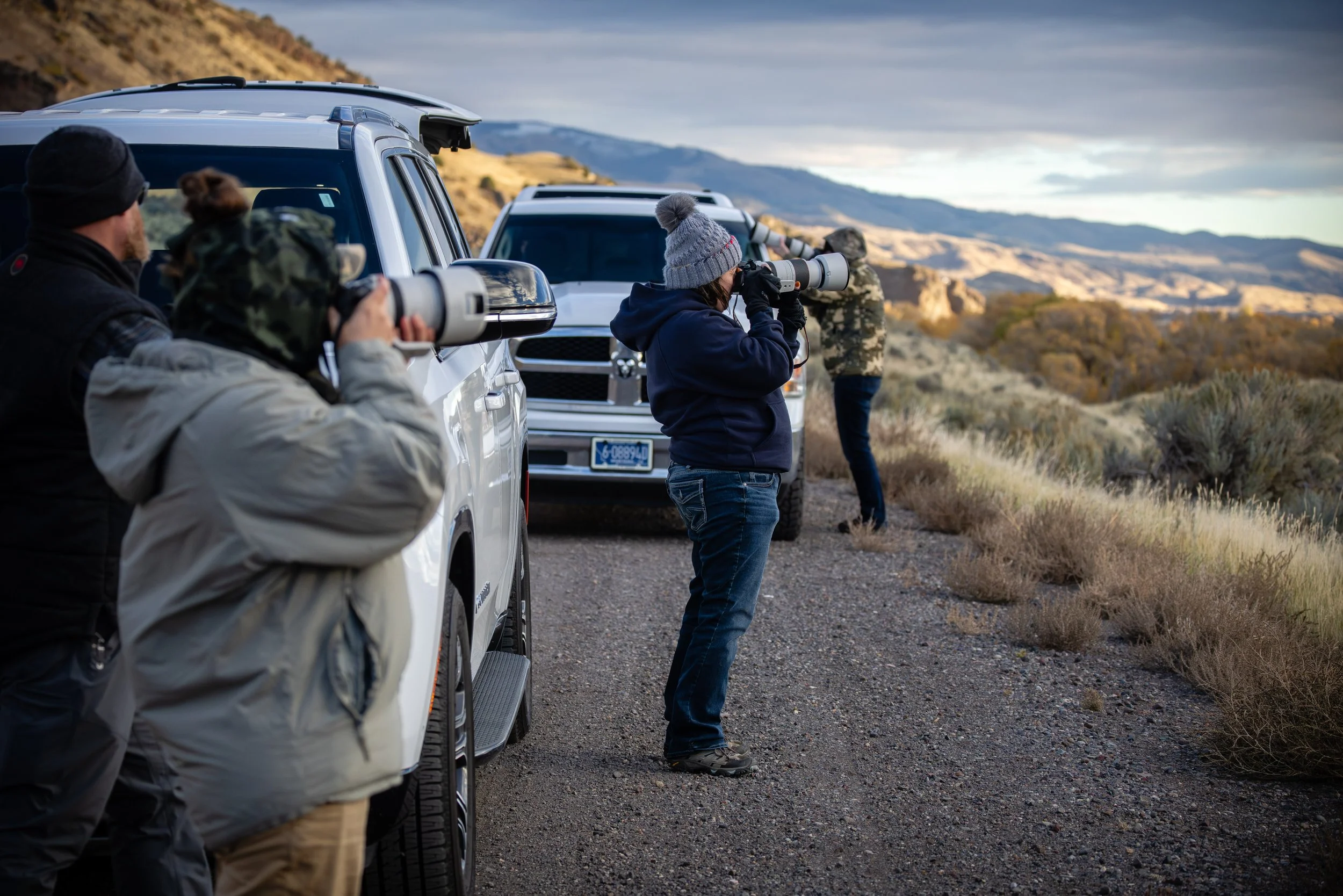
A veteran stands at the edge of a Montana meadow, camera in hand. The morning light is doing something extraordinary—catching the dew on the grass, turning the distant mountains gold, creating shadows that shift and change by the second. Through the viewfinder, they're composing a shot: deciding what to include, what to leave out, where to draw the eye.
In this moment, something profound is happening. The veteran isn't just taking a picture. They're making choices about how to see the world. They're deciding what matters, what deserves attention, what story to tell. They're taking the raw chaos of reality and creating meaning from it.
This is the power of photography—not the technical skills of aperture and shutter speed, though those matter, but the deeper act of framing. When you raise a camera to your eye, you're forced to choose a perspective. You're literally deciding how to see.
For veterans who have struggled to see anything but darkness—who have felt trapped in a perspective shaped by trauma, loss, and disconnection—this act of choosing how to see can be transformative. Photography doesn't change what happened to them. But it can change how they relate to the world going forward. It can teach them that perspective is a choice, that beauty exists alongside pain, that they have agency in how they frame their own story.
This is why Warriors & Quiet Waters includes photography as one of our three Built for More tracks—alongside fly fishing and hunting. Each track offers a distinct pathway to transformation, and for some veterans, the creative expression of photography is exactly what they need.
Photography might seem like an unexpected tool for veteran healing. It's not physical like hunting or fly fishing. It doesn't require wilderness survival skills or outdoor endurance. You can do it anywhere, at any time, with equipment that fits in a bag. But these apparent limitations are actually advantages—and the psychological mechanisms photography engages are uniquely powerful for addressing what many veterans struggle with most.
The Struggle to See Clearly
Before understanding how photography helps, it's worth understanding what many veterans are struggling with in the first place. The challenge isn't just specific symptoms or diagnoses—it's often something more fundamental: a shift in how they see the world itself.
When the Frame Narrows
Combat and trauma change how the brain processes information. In dangerous environments, the mind learns to focus intensely on threats—to scan constantly for what could go wrong, to notice danger signals while filtering out everything else. This hypervigilance is adaptive in war zones. It keeps people alive.
But when veterans return to civilian life, this narrowed focus often persists. The brain continues scanning for threats that aren't there, continues filtering out the positive while amplifying the negative. The mental frame that was essential for survival becomes a prison that excludes beauty, joy, and connection.
Veterans describe this experience in various ways. Some talk about feeling like they're watching life through a window rather than participating in it. Others describe a persistent grayness—not clinical depression necessarily, but a muting of experience where colors seem less vivid and moments feel less meaningful. Many speak of being unable to see what others see—unable to appreciate a beautiful sunset or feel moved by their child's laughter because their attention is locked on potential dangers or painful memories.
This narrowed frame affects relationships, career, and daily functioning. Veterans find themselves disconnected from loved ones who can't understand why they can't "just relax" or "enjoy the moment." They miss opportunities for connection and growth because their attention is captured by threat detection rather than possibility recognition. They survive without thriving because their internal camera is stuck on a setting designed for war.
The Weight of What They've Seen
There's another dimension to the visual struggle. Veterans have often seen things that are difficult to unsee—images that persist in memory, that intrude unbidden, that color how they view the world. These aren't just memories; they're visual imprints that can make the present feel contaminated by the past.
A beautiful landscape might trigger a memory of a similar landscape where something terrible happened. A crowd of people might evoke images of a marketplace before an explosion. The visual world becomes layered with association, and not all those associations are welcome.
This visual weight can lead veterans to avoid engagement with the visual world altogether. They may stop noticing their surroundings, stop looking closely at anything, stop engaging visually with life. This avoidance provides some protection from triggering images, but it also cuts them off from visual beauty and engagement that could support their wellbeing.
The challenge, then, isn't just to help veterans see more—it's to help them develop a new relationship with seeing itself. They need to learn that their eyes can find beauty as well as threat, that visual engagement can be nourishing as well as overwhelming, that they can choose what to focus on rather than being captive to what their trauma-trained brain automatically selects.
Why Photography Works for Veterans
Photography addresses these visual struggles directly—not through conversation about them, but through a different kind of visual engagement. The camera becomes a tool for retraining the eye and reclaiming agency over attention.
The Power of Perspective
Every photograph is an act of perspective-taking. The photographer looks at a scene—complex, chaotic, overwhelming in its totality—and chooses a frame. They decide what to include and what to exclude. They select a point of view. They create order from chaos.
This act mirrors what veterans must do with their own experience. Life after service—especially for those carrying the weight of combat or trauma—can feel chaotic and overwhelming. Everything seems to press in at once: memories, emotions, challenges, losses. The world can feel like too much to process.
Photography teaches that you can choose your frame. You can't control everything in the scene, but you can control where you point the camera. You can't make the difficult parts of experience disappear, but you can choose what to focus on. This isn't denial or avoidance—the rest of the scene still exists—but it is agency. It's the recognition that perspective is, at least partly, a choice.
For veterans who have felt trapped in dark perspectives—seeing only what's wrong, only what hurts, only what's been lost—this lesson can be liberating. They learn, through the literal act of framing photographs, that they have some control over how they see. And that learning transfers far beyond the camera.
Veterans begin to recognize that the frame they've been using for their life isn't the only possible frame. They've been focused on certain things—perhaps the trauma, perhaps the loss, perhaps the struggle—and that focus has shaped what they see. Photography shows them that they can widen the frame, shift the angle, choose a different focus. The difficult elements don't disappear, but they become part of a larger picture that includes other things too.
This is not about positive thinking or ignoring reality. It's about recognizing that all seeing is selective, and that we have more choice in that selection than we might realize. The camera makes this abstract truth concrete: you literally cannot photograph everything at once, so you must choose. And in choosing, you discover that choice itself is possible.
Finding Beauty in Unexpected Places
Photography trains the eye to notice. When you're looking for photographs, you start seeing things you'd otherwise miss: the pattern of light through leaves, the weathered texture of old wood, the expression that flickers across a face for just a moment. The world becomes more interesting because you're paying attention to it differently.
For veterans who have been stuck in survival mode—scanning for threats, watching for danger, focused on what could go wrong—this shift in attention can be profound. Survival mode is useful in combat. It keeps you alive. But when it persists into civilian life, it creates a kind of tunnel vision focused on the negative, the threatening, the dangerous.
Photography redirects attention toward beauty. Not saccharine, Hallmark-card beauty, but the real beauty that exists in every environment if you know how to look for it. The way light falls. The way textures interact. The moments of genuine emotion. The small details that make a scene unique.
This redirected attention doesn't erase the difficult things—veterans don't forget what they've experienced or stop being aware of genuine risks. But it expands their attention to include things beyond threat and loss. They start noticing what's beautiful alongside what's dangerous. They start seeing what's present alongside what's absent. The world becomes larger than their pain.
Veterans often describe this as learning to see again. Not because their eyes stopped working, but because trauma had narrowed their vision to such a small slice of reality. Photography widens that slice, teaching them to see the full picture—including the parts that are worth celebrating.
The training effect persists even when veterans aren't holding a camera. Once you've learned to notice light, you notice light everywhere. Once you've trained yourself to see composition in ordinary scenes, you see it constantly. Photography changes the default setting of attention from threat-detection to possibility-recognition.
Creative Expression as Processing
Trauma lives in the body and mind in ways that words often can't reach. Talking about difficult experiences is valuable, but for many veterans, talk therapy alone isn't enough. The experiences are too overwhelming, too fragmented, too resistant to linear narrative.
Creative expression offers a different kind of processing. When veterans create photographs, they're externalizing something internal. They're taking feelings, perceptions, and experiences and giving them form outside themselves. The photograph becomes a container for something that was previously only inside.
This externalization can be powerfully healing. Feelings that seemed too big to contain become images that can be examined, shared, and understood. Experiences that resisted verbal description find expression in visual form. The act of creating something beautiful from pain transforms the relationship to that pain.
Photography also allows for metaphor in ways that direct discussion doesn't. A veteran might photograph a storm passing over mountains—not because they're documenting weather, but because that image captures something about their own experience that they couldn't put into words. The photograph speaks without requiring explanation. It communicates without demanding articulation.
This kind of symbolic expression can reach places that conversation cannot. Veterans process experiences through their photographs without necessarily naming or analyzing what they're processing. The healing happens in the act of creation itself, not in subsequent discussion of what the creation means.
There's also something powerful about creating beauty from difficult experience. Veterans who have seen terrible things, who carry heavy visual memories, discover through photography that they can also create images worth looking at. They can add beauty to the world, not just carry its weight. This creative capacity becomes evidence of their own resilience and potential.
Presence and Mindfulness
Good photography requires presence. You can't capture a fleeting moment if your mind is elsewhere. You can't notice the perfect light if you're lost in thought. The camera demands attention to the here and now.
For veterans struggling with rumination—replaying past events, worrying about future problems—this demand for presence can be therapeutic. When you're looking through a viewfinder, composing a shot, waiting for the right moment, there's no room for the mind to wander to painful memories or anxious projections. You're here, now, completely.
This enforced presence isn't willpower; it's environment. The activity itself pulls attention into the moment. Veterans who have struggled with meditation or other mindfulness practices often find that photography accomplishes the same thing through a different route. They become present not by trying to be present, but by engaging in an activity that demands presence.
Over time, this experience of presence becomes familiar. Veterans learn what it feels like to be fully here—not trapped in the past, not anxious about the future, but genuinely inhabiting the current moment. Photography gives them repeated practice at this state. And gradually, that capacity for presence extends beyond photography into daily life.
The present moment, it turns out, is often more manageable than the accumulated weight of past and future. When veterans can access presence—when they can drop the burden of memory and anticipation and simply be where they are—they often discover that right now is actually okay. The present moment, free from the overlay of trauma and worry, is survivable. It might even be beautiful.
The photography track is one of three pathways in our Built for More program, powered by Wounded Warrior Project®. Each offers distinct experiences while delivering the same core outcome: veterans equipped to thrive. Learn about Built for More.
The Psychology of Creative Mastery
Beyond the specific benefits of photography as a medium, the experience of developing creative mastery engages psychological mechanisms that support healing and growth. Understanding these mechanisms helps explain why creative work—and photography specifically—can be so transformative.
Competence and Confidence
Learning photography is genuinely difficult. Understanding light, composition, exposure, and the technical aspects of camera operation takes time and practice. Creating images that effectively communicate what you see and feel requires developing real skill.
This difficulty is valuable. When veterans develop genuine competence in photography—when they can see their skills improving, when they can create images they're proud of, when they can solve technical and creative problems they couldn't solve before—they experience earned confidence.
This isn't the false confidence of participation trophies or empty affirmation. It's the real confidence that comes from demonstrated capability. Veterans know they can do something difficult because they've done it. They've struggled, practiced, failed, learned, and eventually succeeded. That experience transfers far beyond photography.
Many veterans who complete our photography track describe a shift in how they approach new challenges generally. Having proven to themselves that they can master something difficult, they're more willing to attempt other difficult things. The specific skill matters less than the demonstrated capacity for growth.
This is particularly important for veterans whose confidence has been shaken by the challenges of transition. They may have been highly competent in their military roles—experts in their fields, trusted by their teams, confident in their abilities. Civilian life can feel like starting over, and the unfamiliarity can erode confidence that took years to build.
Photography provides an opportunity to build competence in something new—to prove that the capacity for mastery wasn't left behind with the uniform. Veterans discover that they can still learn, still grow, still become skilled at challenging tasks. This rediscovery of learning capacity is itself transformative.
Creating vs. Consuming
Modern life is largely passive. We consume entertainment, scroll through social media, watch videos others have made, look at photographs others have taken. This consumption isn't inherently bad, but it positions us as audiences rather than actors. We receive rather than create.
Photography shifts veterans from consuming to creating. Instead of looking at images others have made, they're making their own. Instead of passively receiving someone else's perspective, they're actively constructing their own. This shift from passive to active engagement changes the relationship to experience itself.
Creators engage with the world differently than consumers. They look for possibilities rather than just accepting what's presented. They think about how things could be framed, captured, expressed. They develop a sense of agency—the feeling that they can make things happen rather than just having things happen to them.
For veterans who have felt powerless—buffeted by circumstances beyond their control, overwhelmed by systems they can't navigate, stuck in situations they didn't choose—this sense of creative agency can be profoundly empowering. They're not just experiencing the world; they're creating something in it. They're not just responding to what happens; they're making things happen.
This creative stance extends beyond photography. Veterans who learn to see themselves as creators rather than consumers begin approaching other areas of life with the same energy. They become more proactive in relationships, more engaged in their communities, more willing to shape their circumstances rather than simply enduring them.
The Lasting Artifact
Unlike many therapeutic experiences, photography produces tangible artifacts. The photographs exist. They can be printed, shared, displayed, returned to. They're evidence of growth that doesn't fade when the experience ends.
These artifacts serve multiple purposes. They're reminders of capability—veterans can look at images they've created and remember that they made something beautiful. They're evidence of perspective shift—photographs from early in the program often look different from those taken later, documenting visible growth. They're connection points—images can be shared with family, friends, and community, opening conversations and building bridges.
Veterans leave our photography track with a portfolio of work they've created. Not just memories of an experience, but actual photographs they made. These artifacts continue to provide value long after the program ends—reminding veterans of their capability, their growth, and the beauty they've learned to see.
The photographs also become conversation starters. When veterans share their images with family members, they're sharing more than pictures—they're sharing evidence of transformation. The images communicate something about the veteran's journey that might be difficult to express in words. They become bridges between the veteran's experience and their loved ones' understanding.
The Photography Track at Warriors & Quiet Waters
Our photography track isn't a casual introduction to cameras. It's a comprehensive experience designed to develop genuine skill while providing the psychological benefits that photography can offer. And it's powered by a partnership that brings exceptional resources and expertise to our veterans.
Powered by Wounded Warrior Project®
Our photography track is powered by Wounded Warrior Project®, bringing additional resources and expertise to the experience. This partnership reflects shared commitment to veteran wellbeing and allows us to offer a photography program that would be impossible to create alone.
The partnership ensures that veterans receive top-quality instruction, equipment, and support throughout their photography journey. It's an example of what becomes possible when organizations committed to veteran thriving work together rather than in isolation.
This collaboration allows us to provide resources that would otherwise be out of reach. Professional-grade equipment, expert instruction, months of sustained support—these require investment that no single organization could easily provide. The partnership makes comprehensive photography education possible for veterans who deserve nothing less.
Veteran Leadership: Mike MacLeod
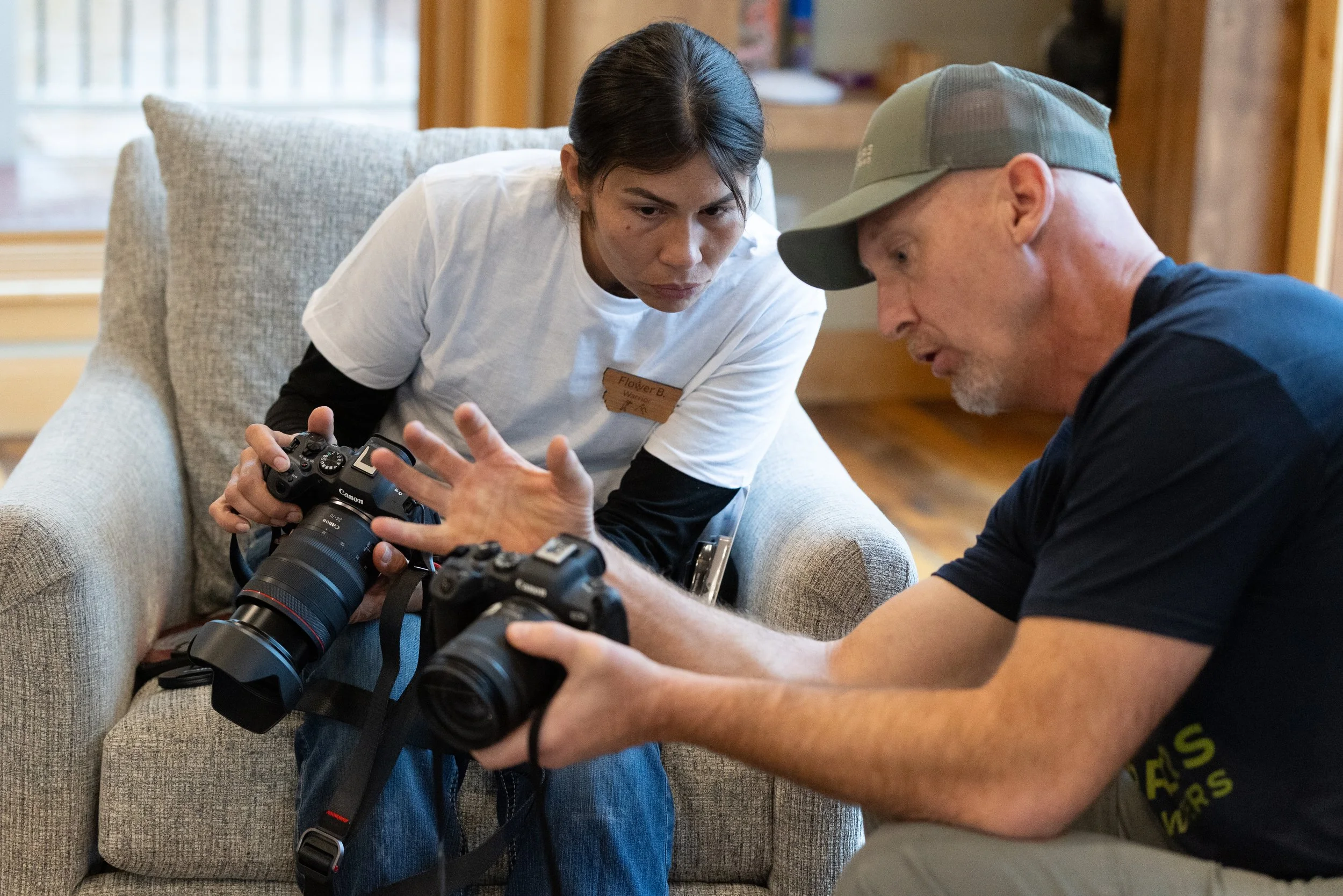
The photography track is led by Mike MacLeod—a combat correspondent who served with the 82nd Airborne Division and completed tours in Iraq and Afghanistan. Mike isn't just a skilled photographer teaching veterans; he's a veteran who has walked the path himself.
This matters enormously. Mike understands what veterans have experienced because he's experienced it. He knows the challenges of transition because he's navigated them. He can speak to the power of photography as a healing tool because photography has been part of his own journey.
As a combat correspondent, Mike's military career centered on visual storytelling in the most demanding conditions imaginable. He learned to find shots in chaos, to capture moments that communicate truth, to use photography as a tool for documentation and expression under extreme pressure. That expertise—combined with his personal understanding of veteran experience—makes him uniquely qualified to guide other veterans on their photography journey.
Veterans in our photography track aren't learning from someone who read about military service in books. They're learning from someone who has been where they've been, who understands their experience from the inside, who can speak their language and anticipate their needs. Mike's leadership creates a container of understanding and trust that allows veterans to engage fully in the work.
There's something powerful about learning from someone who has successfully navigated the journey you're on. Mike serves as evidence that transformation is possible—that veterans can move through the challenges of transition and build meaningful lives on the other side. His presence communicates hope in a way that no amount of theory or encouragement from outsiders could match.
The Structure of the Experience
Like all Built for More tracks, the photography track includes an immersive Initial Experience, followed by months of continued engagement through the Discovery Phase, culminating in a Capstone Experience that brings cohorts back together.
During the Initial Experience, veterans receive intensive instruction in photography fundamentals—technical skills like exposure and composition, but also the creative and expressive dimensions that make photography meaningful. They spend time in Montana's dramatic landscapes, practicing what they learn in environments that reward attention and presence.
Montana provides an ideal classroom for photography instruction. The landscapes are visually stunning, offering endless opportunities for composition and experimentation. The light changes constantly—morning gold, midday clarity, evening drama—teaching veterans to see how illumination shapes perception. The environment is removed from daily life, allowing veterans to focus completely on the work without the distractions and obligations of home.
The Discovery Phase keeps veterans connected to their cohort and engaged in ongoing development. They continue practicing photography in their home environments, sharing work with fellow veterans, and integrating what they've learned into daily life. The skills developed in Montana become habits practiced everywhere.
This sustained engagement is crucial. Photography skills require practice to develop, and the psychological benefits deepen over time. The Discovery Phase ensures that veterans don't just have a peak experience and then return to old patterns—they continue developing, practicing, and growing throughout the months following their Initial Experience.
The Capstone Experience brings cohorts back together, allowing veterans to see how far they've come. The photographs they create at Capstone are often dramatically different from those they created initially—not just technically better, but deeper, more personal, more expressive. The growth is visible in the images themselves.
The Cohort Experience
Photography is often seen as a solitary pursuit—one person, one camera, one vision. But in our program, photography becomes a shared journey. Veterans go through the experience with a cohort of fellow veterans who are on similar paths.
This cohort structure provides something that individual photography instruction cannot: community. Veterans learn together, struggle together, break through together. They see each other's work and offer feedback. They share what they're discovering—about photography and about themselves. The bonds formed in this shared creative journey often last long after the program ends.
There's particular power in creative work done alongside others who understand veteran experience. Civilians might appreciate a veteran's photographs, but fellow veterans understand the layers of meaning those images might carry. They know what it means to see beauty after seeing horror. They understand the significance of choosing what to focus on after years of being unable to choose anything. The cohort becomes a community of understanding that supports each member's growth.
Veterans often describe the cohort as one of the most valuable aspects of the program. Long after the formal instruction ends, many remain in contact with their cohort members—sharing new work, encouraging each other's continued development, maintaining the connections formed during their shared photography journey.
Beyond the Program
Photography is uniquely suited to ongoing practice after the program ends. Unlike some outdoor activities that require special locations or equipment, photography can be practiced anywhere with relatively modest gear. Veterans can continue developing their skills in their home communities, seeing their familiar environments through new eyes.
Many veterans who complete our photography track describe how the practice has become part of their daily life. They notice light differently. They see composition in ordinary scenes. They carry their camera (or phone) with attention to what might be worth capturing. The skills and perspectives developed in the program become ongoing resources for wellbeing.
Some veterans go further, pursuing photography professionally or semi-professionally. They may document other veteran programs, capture events for their communities, or simply continue developing as artists. The program provides a foundation; where veterans take it from there is up to them.
What matters most isn't whether veterans pursue photography as a career—it's whether the perspectives and skills they've developed continue serving their wellbeing. For most, photography becomes a practice they can return to whenever they need presence, beauty-finding, creative expression, or simply a way to engage with the world differently than they did before.
Our outcomes are independently verified by Syracuse University's Institute for Veterans and Military Families: 4x improvement in resilience, 4x improvement in sense of purpose, 2x increase in overall thriving—measured months after program completion. See our verified impact.
Montana: The Ideal Classroom
There's a reason our photography track takes place in Montana rather than a studio somewhere. The environment itself is part of the curriculum—a visual feast that demands attention and rewards patience.
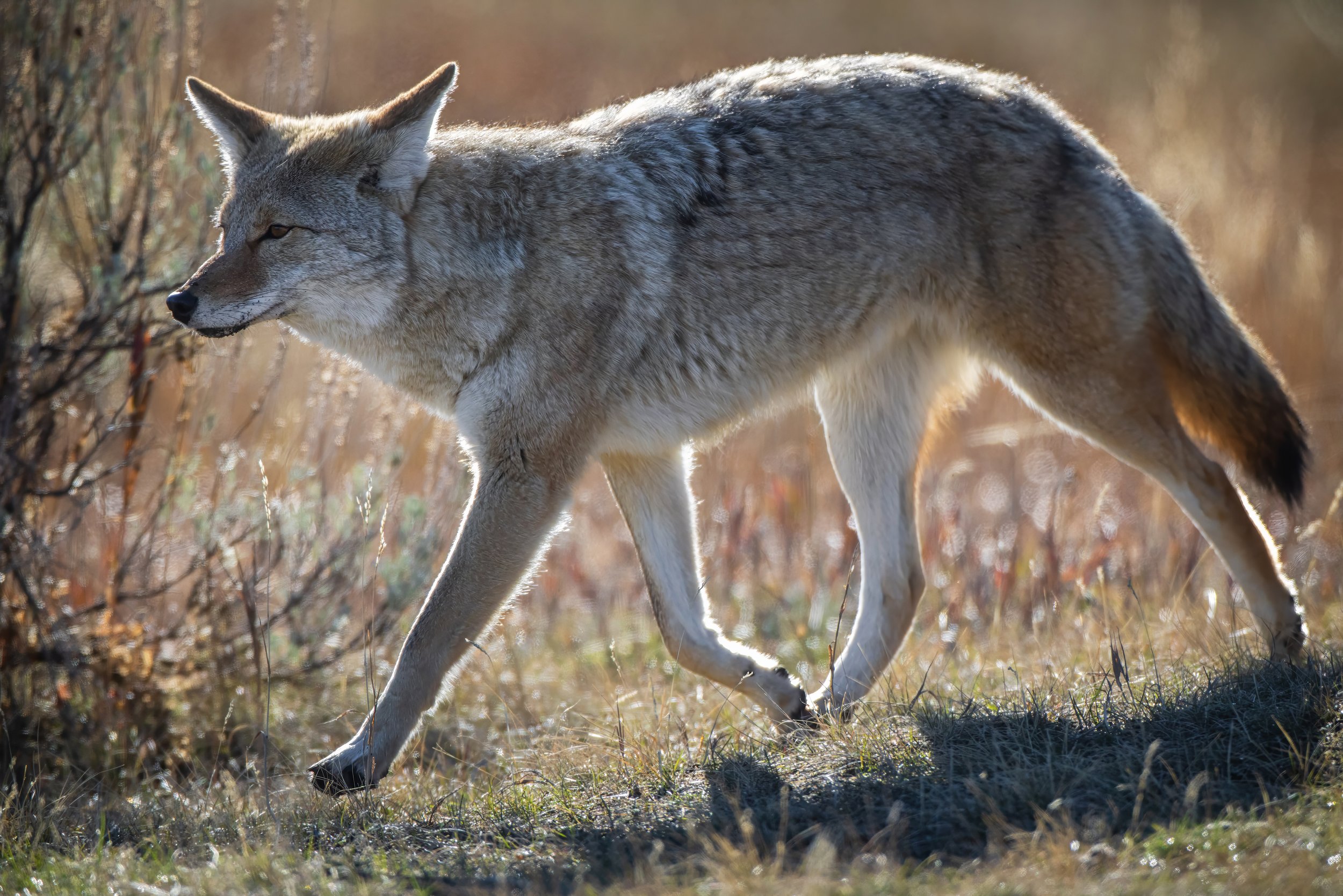
Montana's landscapes offer infinite variety for photographic exploration. Mountain ranges catch light differently at every hour. Rivers and streams provide studies in motion and reflection. Wildlife appears unexpectedly, requiring readiness and quick decision-making. Weather changes constantly, transforming the same scene from one moment to the next. Veterans never run out of subjects; they only run out of time.
The dramatic quality of Montana light teaches veterans about seeing in ways that studio photography cannot. Here, light isn't something you create with equipment—it's something you chase, wait for, respond to. Veterans learn to read the sky, to anticipate how conditions will change, to position themselves for moments they can sense approaching. This responsive relationship with natural light develops awareness and patience that transfer far beyond photography.
Perhaps most importantly, Montana removes veterans from their everyday environments. Away from home, away from routine, away from the triggers and responsibilities of daily life, they can focus completely on the work of seeing differently. The unfamiliar landscape becomes a clean slate—a place without the associations and patterns that might constrain vision back home.
This immersive environment accelerates learning and transformation. Veterans aren't squeezing photography into the margins of their regular lives; they're living inside photography for days at a time. The intensive immersion creates space for breakthrough—for the kind of shift in perspective that might take months to achieve in a weekly class back home.
Photography as a Different Path
Not every veteran needs the same thing. Some are drawn to the physical challenge and primal intensity of hunting. Some find their transformation through the meditative rhythm and technical precision of fly fishing. And some need something different—a creative path that engages different parts of themselves.
Photography serves veterans who might not be drawn to more physically demanding outdoor activities. It's accessible to those with physical limitations that might make hunting or extensive wading difficult. It offers a creative outlet for veterans who express themselves better through images than through words or physical action.
But photography isn't just for those who can't do other things—it's for those who are uniquely suited to creative expression. Some veterans have always seen the world differently, noticed beauty where others saw ordinary, felt drawn to capture and share what they see. For these veterans, photography isn't a consolation prize; it's the perfect fit.
The three tracks exist because different veterans need different pathways. Photography isn't better or worse than fly fishing or hunting—it's different. And for the right veterans, that difference is exactly what they need.
Veterans often know which track calls to them. Some feel the pull toward the physical engagement of hunting or the technical challenge of fly fishing. Others know immediately that photography is their path—that the camera feels right in their hands, that visual expression resonates with something deep in who they are. The three tracks ensure that this intuition can be honored.
Some veterans choose photography because they already have experience with cameras—perhaps they were combat photographers or simply enjoyed capturing images during their service. For them, the track offers an opportunity to deepen existing skills while experiencing them in a new context. Others come with no photography background at all, drawn by something they can't quite name—a sense that visual expression might be their language for growth. Both starting points work; the track meets veterans where they are.
What matters isn't prior experience but willingness to engage. Photography requires vulnerability—the willingness to show others how you see the world, to share images that reveal something about your perspective. Veterans who thrive in the photography track are those willing to take that risk, to let their cohort and instructors see the world through their eyes. That vulnerability, it turns out, is itself part of the healing.
What Donors Make Possible
The photography track requires significant investment. Quality instruction, professional-grade equipment, Montana experiences, months of ongoing engagement—none of this happens for free. Every veteran who completes our photography track does so because donors believe in the power of this work.
Your investment funds the expertise that makes transformation possible. It pays for instruction from someone like Mike MacLeod—a veteran who understands both photography and veteran experience. It supports the partnership with Wounded Warrior Project® that brings additional resources to our veterans. It enables the sustained engagement over months that lasting change requires.
Your investment also funds what veterans take with them. The skills they develop. The perspectives they gain. The capacity for presence, creativity, and beauty-finding that becomes part of who they are. These benefits persist long after the program ends, providing ongoing returns on your investment.
And the impact ripples outward. Veterans who learn to see differently become different people in their families and communities. They bring their new perspectives home. They share what they've created. They model a different way of engaging with the world. Your investment in one veteran's photography journey creates benefits that extend far beyond that individual.
When you invest in our photography track, you're investing in a veteran's ability to see beauty again. You're investing in their capacity for presence, for creative expression, for choosing how they frame their own experience. You're investing in transformation that lasts—not just a temporary experience, but a fundamental shift in how they engage with the visual world.
This is what it means to invest in veteran thriving rather than just veteran survival. Crisis intervention keeps veterans alive—and that matters. But photography helps them build lives worth living. It helps them see beauty, create meaning, develop mastery, and connect with others through what they create. It helps them thrive.
Consider what you're actually funding when you invest in the photography track. You're funding the moment when a veteran who hasn't felt present in years suddenly loses themselves in composing a shot—fully engaged, fully here, fully alive. You're funding the evening when a cohort gathers to share their day's images and a veteran sees their own growth reflected back through their peers' reactions. You're funding the months of continued practice when photography becomes not just a skill but a way of being in the world.
You're funding the transformation that happens when a veteran realizes they can create beauty, not just witness it. You're funding the connection that forms when they share their images with family members and open conversations that words alone couldn't start. You're funding the confidence that builds when they master something difficult and remember that they are capable of growth.
These are the returns on your investment—returns that compound over time as veterans carry their new perspectives into every area of their lives. The photography track doesn't just teach camera skills. It teaches a different relationship with seeing, with creating, with being present in the world. That transformation ripples outward in ways that are impossible to fully measure but undeniably real.
Learning to See Again
At its core, the photography track is about learning to see again. Not because veterans' eyes have stopped working, but because trauma, disconnection, and struggle can narrow vision until only certain things are visible—usually the difficult things.
Photography teaches veterans to widen that vision. To notice beauty alongside pain. To find moments worth capturing in ordinary life. To recognize that perspective is partly a choice and that they have agency in how they frame their experience. These lessons, learned through the literal act of photography, transfer to how they see their entire lives.
Veterans who complete our photography track often describe the world looking different afterward. Not because the world changed, but because they did. They see more. They notice more. They find beauty in places they would have overlooked before. The camera has trained their eye, and that training persists whether or not they're holding a camera.
This expanded vision is one of the most powerful outcomes of the photography track. It's not just about taking good pictures—though veterans do learn to take good pictures. It's about developing a new way of engaging with visual experience. It's about choosing to see what's beautiful, what's meaningful, what's worth attention.
For veterans who have been trapped in darkness—seeing only what's wrong, only what hurts, only what's been lost—this expanded vision can change everything. They discover that beauty exists alongside pain. They learn that they can choose, at least partly, what to focus on. They develop the capacity to frame their experience in new ways.
The photographs they create become evidence of this transformation. Early images might be technically competent but emotionally flat. Later images show depth, personality, point of view. The evolution is visible—documented in the artifacts themselves. Veterans can look back at their own portfolios and see growth that might otherwise be invisible.
Because sometimes healing begins with learning to see again. And sometimes a camera is the perfect tool for that learning.
Ready to invest in veteran transformation? Your support funds the photography track and all three Built for More pathways—creating lasting change for veterans who are ready to thrive. Make a gift today.