
The Military-to-Civilian Transition: What Veterans Need Beyond Jobs
Every year, roughly 200,000 service members transition out of the military. For many, it's the most disorienting experience of their adult lives—not because they can't find work, but because they're grappling with something far more fundamental: Who am I now that I'm no longer a soldier?
Research published in JAMA Network Open reveals that veterans' suicide risk peaks at 6-12 months after separation—precisely when they're navigating this profound transition. According to Stop Soldier Suicide, veterans experiencing difficult transitions are five times more likely to experience suicidal ideation. And when asked if their transition was more difficult than expected, 48% of veterans agree.
These statistics point to an uncomfortable truth: we're failing veterans during their most vulnerable period—not because we lack programs, but because most transition support focuses almost exclusively on employment and benefits while ignoring the deeper human needs that determine whether a veteran thrives or merely survives.
What Traditional Transition Programs Get Right—and What They Miss
The Department of Defense's Transition Assistance Program (TAP) represents the military's primary effort to prepare service members for civilian life. The program covers important ground: resume writing, interview skills, benefits navigation, and financial planning. These are practical necessities, and for many veterans, TAP provides valuable orientation to civilian systems.
But a Government Accountability Office report found significant gaps in TAP implementation: nearly a quarter of service members who need maximum transition support didn't attend the tailored classes designed to help them. Most service members don't start the transition process at least a year in advance as required. And even those who complete the program often find themselves unprepared for the psychological realities of leaving military service.
The problem isn't the existence of TAP—it's what the program fundamentally addresses versus what veterans actually need. As one veteran advocate bluntly put it: "Employment doesn't define success in the transition process. Connection does."
Research from Frontiers in Sociology examining veterans over a decade found that what initially made transition challenging wasn't the job search—it was "the encounter with a contrasting civilian culture and the need to change identity, learn a new civilian language, and transfer military experience and skills into civilian working roles."
In other words, veterans don't just need jobs. They need to reconstruct their entire sense of self.
The Five Dimensions of Transition Most Programs Ignore
Understanding what veterans truly need during transition requires looking beyond employment statistics to the fundamental human needs that military service both fulfills and transforms.
1. Identity Reconstruction
Many people enter the military during emerging adulthood and form their identity around service. The military provides clear answers to life's fundamental questions: Who am I? A soldier. What do I do? My mission. Where do I belong? With my unit.
When service ends, those answers vanish overnight. A meta-synthesis of 28 studies on military-to-civilian transition found that losing one's "ultimate concerns" within the civilian context evoked "existential questions of meaninglessness, emptiness, and loss of something vital." Veterans don't just miss their jobs—they miss who they were.
The ten-year longitudinal study from Frontiers in Sociology found something remarkable: military identity doesn't fade with time. Even a decade after separation, veterans described their military identity as "staying with you, both how you are educated and in terms of knowledge, but also how you are as a person." The challenge isn't letting go of military identity—it's integrating it with a new civilian self.
2. Purpose and Meaning
Military service provides something rare in civilian life: an unambiguous sense of purpose. Every task, no matter how mundane, connects to something larger—national security, protecting fellow service members, serving the country. That sense of contributing to a higher purpose becomes woven into daily existence.
Then separation comes, and suddenly purpose must be manufactured rather than assigned. Research from the PMC study on reculturation suggests that "factors related to identity needs have yet to be adequately addressed" in transition programming, even as housing and employment assistance improves.
Finding civilian work addresses financial needs. Finding meaningful work that reconnects veterans to purpose—that addresses the soul.
3. Community and Belonging
The military creates bonds under extraordinary circumstances—shared hardship, mutual dependence, collective purpose. These relationships form what researchers describe as "extraordinary community and camaraderie." According to the transition meta-synthesis, loss of this community was "the most challenging part" of civilian reintegration.
The civilian world operates differently. Socializing is no longer implicit in the job. Relationships must be actively cultivated rather than automatically formed through shared service. Many veterans report feeling like outsiders—conversations, workplace behaviors, and social norms seem unfamiliar after the intensity of military culture.
This isn't mere nostalgia. Research confirms that social connectedness is fundamental to veteran wellbeing, and disconnection contributes to negative mental health outcomes including suicidality. Veterans don't just want community—they need it for their mental health and survival.
4. Mental Health and Emotional Wellbeing
The transition period creates what researchers call a "deadly gap" in mental health care. Veterans leaving active duty often lose their military healthcare coverage before establishing VA care or finding civilian providers. According to research from PMC on future self-continuity, these first years represent "the time in which transitioning veterans have the highest rates of mental health challenges including a heightened risk for suicide."
But the mental health challenges of transition extend beyond access to care. Veterans face unique stressors: adapting to civilian pace and culture, processing combat experiences, managing relationships transformed by service, and confronting identity questions that civilian therapists may not understand.
The VA's 2024 National Veteran Suicide Prevention Report identifies the most common risk factors among veteran suicides: pain, sleep problems, declining health, relationship problems, and hopelessness. Notice what's absent from this list: unemployment. The factors driving veteran suicide are deeply personal, relational, and existential—not primarily economic.
5. Family Relationships and Reintegration
Military families experience the transition alongside veterans, often facing their own adjustment challenges. Spouses and children may have developed new routines during deployments. Returning veterans must navigate changed household dynamics while simultaneously managing their own identity reconstruction.
Research shows that untreated mental health issues, particularly post-traumatic stress (PTS), can lead to increased irritability, difficulty making decisions, and emotional withdrawal—all of which strain family relationships. Family members may also develop secondary stress, experiencing symptoms similar to those of the veteran.
Transition support that ignores family dynamics addresses only part of a veteran's reality. Sustainable reintegration requires attention to the entire family system.
Warriors & Quiet Waters' Built for More program addresses what traditional transition support misses: identity, purpose, community, and sustained personal growth. The 6-12 month journey helps veterans find deeper connection to themselves, their people, and their purpose. Third-party evaluation by Syracuse University’s Institute for Veterans and Military Families (IVMF) shows participants achieve 4x greater sense of purpose and are 2x more likely to be thriving. Learn more about Built for More or see Our Impact to understand how comprehensive support transforms veteran lives.
Why Holistic Approaches Work Better
The evidence increasingly points to a fundamental insight: transition success depends on addressing veterans as whole people, not just job seekers.
A Journal of Veterans Studies article on whole health approaches explains: "Conventional medical and mental health models tend to focus primarily on a limited subset of outwardly facing symptoms" while overlooking "purpose/mission, transition role and identity, relationships, and spiritual health." These overlooked dimensions are "especially relevant for veterans navigating civilian life."
The article continues: "Most people, including veterans, need more than therapy or prescriptions to address their health or mental health challenges. They need meaningful connections, creative outlets, community belonging, and opportunities for post-service growth."
This isn't abstract theory—it's practical wisdom drawn from working with veterans. Programs that address identity reconstruction, purpose discovery, and community building alongside practical skills consistently produce better outcomes than those focused narrowly on employment.
The research on military transition theory supports this: successful transition "is a function of several factors, including having a job, access to health care, stable housing, and a sense of belonging." Notice that belonging—community connection—stands alongside material necessities as essential for successful reintegration.
What Effective Transition Support Actually Looks Like
Given what research tells us about veteran needs during transition, what would comprehensive support actually look like?
It would be sustained, not one-time. The transition challenges veterans face unfold over months and years, not days. One expert observed that given "the level of conditioning and associated experiences in the military, it takes a personalized program of consistent engagement over a period of weeks if not months" to support genuine reintegration. A weeklong workshop cannot address an identity crisis years in the making.
It would build community, not just provide services. Veterans thrive in connection with others who understand their experiences. Effective programs create cohorts—groups of veterans journeying together, supporting each other, forming the kind of bonds that approximate military camaraderie while being rooted in civilian life.
It would address identity and purpose explicitly. Rather than assuming veterans will figure out who they are while job searching, effective support helps veterans consciously explore their values, strengths, and aspirations. It guides them through the work of integrating military identity with emerging civilian self.
It would be strength-based, not deficit-focused. Veterans aren't broken—they're extraordinary individuals who've been shaped by service. Effective programs build on veteran strengths rather than treating transition as pathology. They challenge veterans to grow rather than merely cope.
It would include nature and experiential elements. Research consistently shows that nature-based experiences provide unique therapeutic benefits: reducing rumination, decreasing stress hormones, and creating optimal conditions for reflection and growth. Veterans often find that outdoor settings provide the psychological space traditional therapy offices cannot.
It would continue beyond the program. The relationships and skills developed during transition support should extend into ongoing connection. Alumni networks, continued peer support, and lasting community create the sustained belonging that prevents post-program isolation.
How Warriors & Quiet Waters Addresses the Whole Veteran
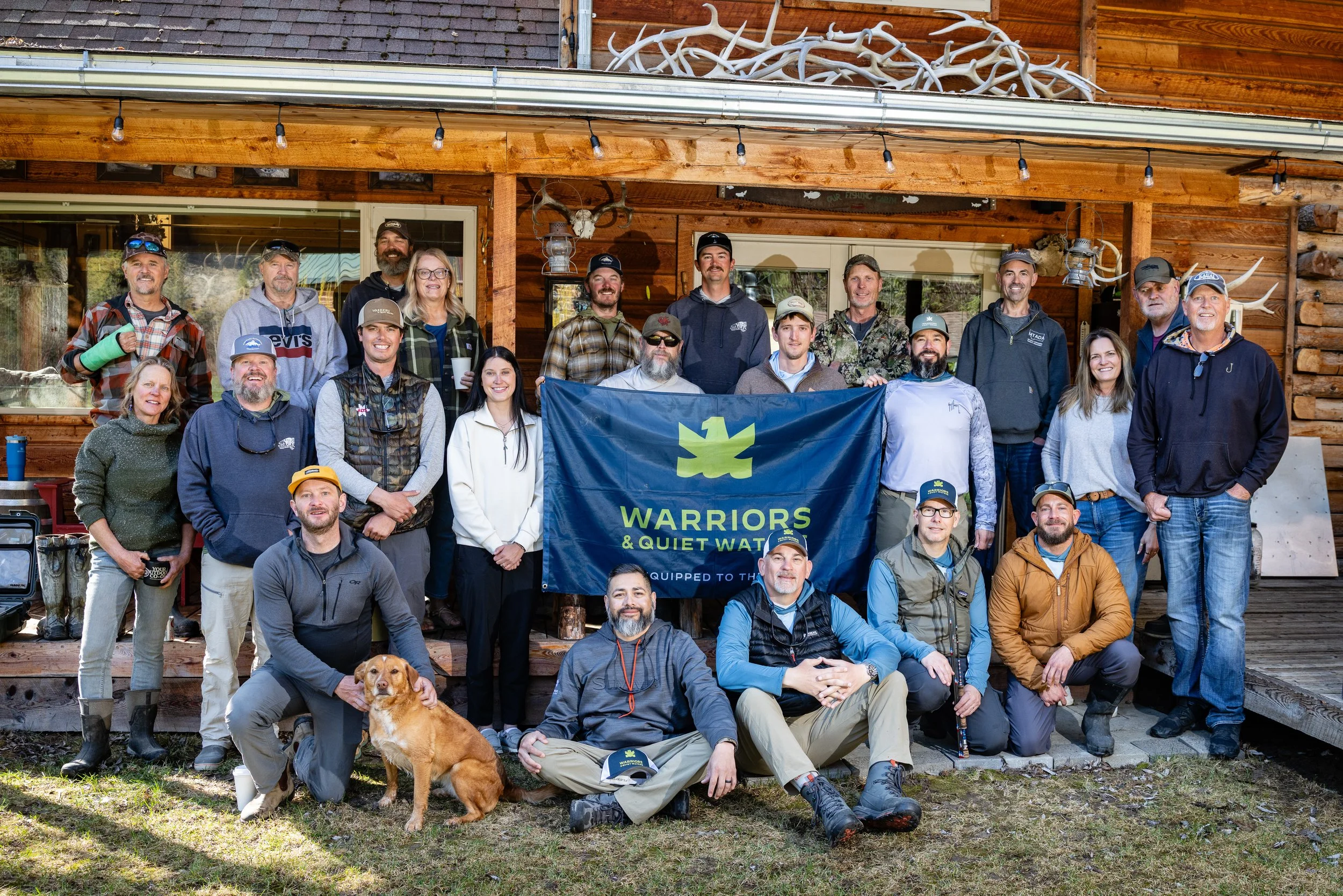
At Warriors & Quiet Waters, we designed Built for More specifically to address what traditional transition programs miss. Our approach reflects the research: veterans need sustained engagement addressing identity, purpose, community, and personal growth—not just employment assistance.
The program begins with an Initial Experience—five days in Montana's wilderness where nature creates space for reflection and connection. Veterans form cohorts with others who understand their experience, beginning relationships that will sustain them through the journey ahead.
But the peak experience is just the beginning. The Discovery Phase extends over 6-12 months, with regular video conferences connecting veterans with their cohort and facilitators. Together, they work through concepts designed to help veterans identify meaningful purpose, build resilience habits, and recalibrate life's trajectory.
The Capstone Experience reunites the cohort in nature to honor their transformation and commit to the path ahead. By then, veterans have changed—more alive, more grounded, and more connected to what and who matters most.
Our mission reflects what research shows veterans actually need: "Warriors & Quiet Waters empowers post-9/11 combat veterans and their loved ones to thrive and live purpose-driven lives through peak experiences in nature, meaningful relationships, and a sense of community."
This isn't theory—it's practice, validated by rigorous third-party evaluation. IVMF has assessed our outcomes, finding that Built for More participants achieve:
• 4x greater sense of purpose
• 4x greater resilience
• 2x more likely to be thriving
These outcomes address precisely what research identifies as essential for successful transition: purpose, resilience, and overall thriving—not just employment status.
Why This Matters for Everyone Who Cares About Veterans
The roughly 200,000 service members who transition each year represent an enormous national resource—leaders forged by service, shaped by adversity, and capable of continued contribution to families, communities, and country.
But that potential depends on how we support them during their most vulnerable period. Programs that address only employment leave veterans to navigate identity reconstruction, purpose discovery, and community building alone. Too often, the result is veterans who have jobs but feel lost—employed but not thriving.
The research is clear: comprehensive support that addresses the whole veteran produces dramatically better outcomes than narrow employment assistance. Veterans deserve programs that treat them as complete human beings, not just job seekers.
At Warriors & Quiet Waters, we reject the narrative that veterans are broken. We believe veterans are extraordinary individuals who need—and deserve—support that matches the magnitude of their transition. We exist "not just to provide relief—but to challenge veterans to become the fullest version of themselves."
That's what veterans need beyond jobs: the opportunity to discover they were built for more.
Since 2007, Warriors & Quiet Waters has served over 1,000 combat veterans through programs that address identity, purpose, community, and sustained transformation—not just employment. Our outcomes are verified by Syracuse University, and every program is offered at no cost to veterans. Visit Our Impact to see the evidence, or make a donation to fund comprehensive transition support that helps veterans truly thrive.