
Montana's Role in Veteran Healing: Why the Big Sky State Matters
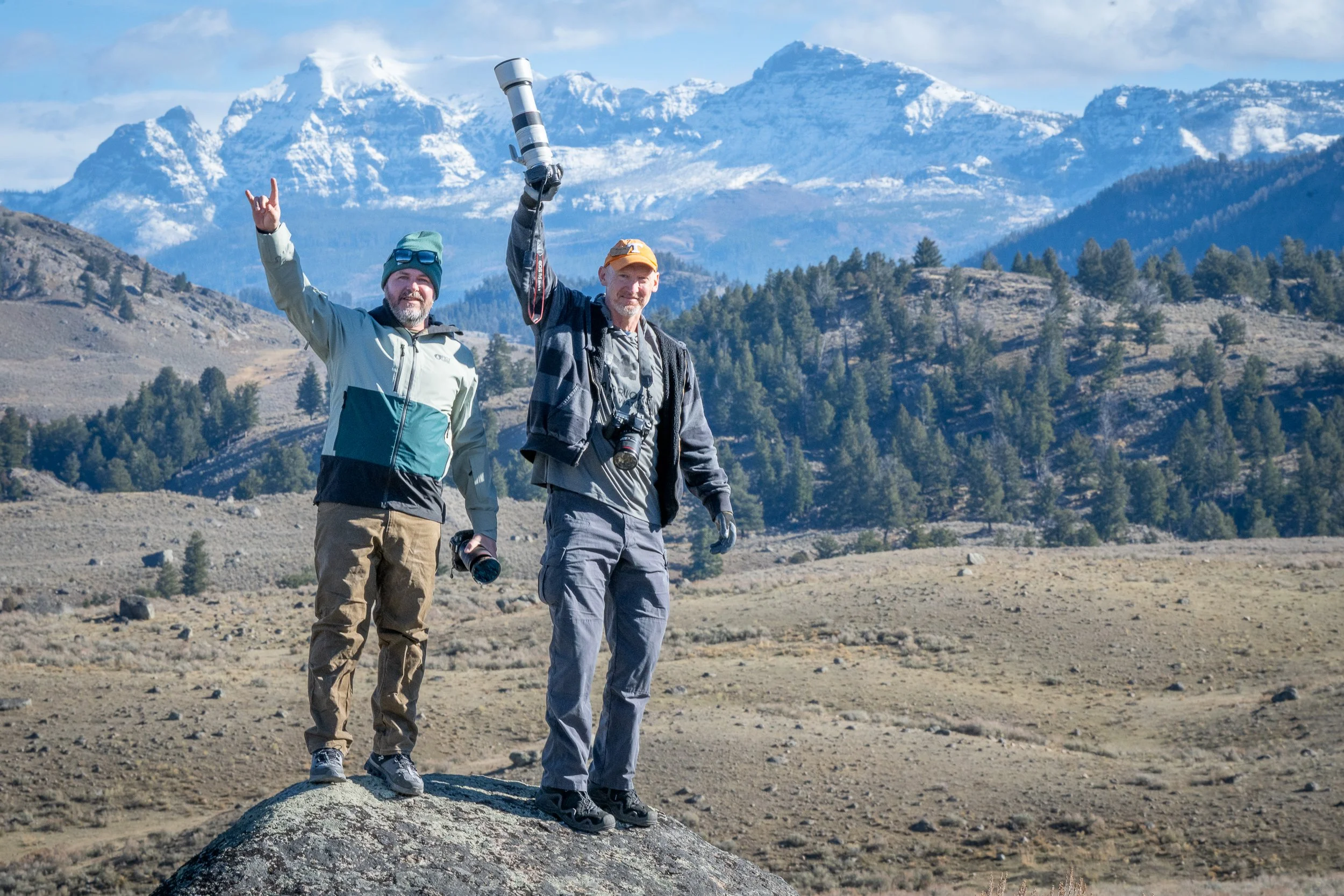
Stand on the banks of the Gallatin River at dawn. Watch steam rise from the water as the sun crests the Bridger Mountains. Listen to the silence—actual silence, broken only by the river's voice and the occasional call of an osprey.
Now ask yourself: Could this experience happen anywhere else?
For veterans navigating the complex terrain of post-service life, that question matters more than you might think. Because when it comes to healing, where you are shapes what becomes possible.
Montana isn't just a beautiful backdrop for veteran programs. It's an active participant in transformation—a co-facilitator that science is only beginning to understand. At Warriors & Quiet Waters, we've witnessed this for nearly two decades. And the research increasingly explains what we've observed: place matters profoundly.
The Science of Why Nature Heals
The therapeutic power of natural environments isn't new-age speculation. It's documented science with measurable outcomes.
In the 1980s, psychologists Rachel and Stephen Kaplan developed Attention Restoration Theory, which proposes that natural environments restore depleted cognitive resources. Our modern lives demand constant "directed attention"—the effortful focus required for work, driving, managing screens, and navigating daily decisions. This capacity is finite, and when depleted, we experience mental fatigue, reduced concentration, and irritability.
Natural environments offer what the Kaplans called "soft fascination"—gently interesting stimuli like clouds moving across the sky, leaves rustling in wind, or water flowing over rocks. These experiences engage our involuntary attention while allowing our directed attention to rest and recover.
Around the same time, environmental psychologist Roger Ulrich developed Stress Recovery Theory. His research demonstrated that exposure to natural environments produces measurable physiological changes: reduced heart rate, lower blood pressure, decreased cortisol levels, and increased parasympathetic nervous system activity—the "rest and digest" mode that counteracts chronic stress.
For veterans carrying the weight of combat stress, these findings have profound implications. Standard therapeutic settings—clinical offices, treatment centers, even well-designed VA facilities—cannot replicate what happens when someone stands in a mountain meadow with nothing but sky in every direction.
Blue Mind: The Special Case of Water
Marine biologist Wallace J. Nichols coined the term "Blue Mind" to describe the mildly meditative state people enter when near, in, on, or under water. His research synthesizes evidence showing that water exposure triggers specific neurological responses—increased dopamine, lowered cortisol, and stimulation of the parasympathetic nervous system.
"The mere sight and sound of water can induce a flood of neurochemicals that promote wellness, increase blood flow to the brain and heart, and induce relaxation," Nichols explains.
Water creates a "normalizing background," according to neuroscientist Michael Merzenich. Unlike busy streets or crowded spaces, bodies of water offer high predictability—largely the same from moment to moment—allowing the emotional centers of the brain to relax.
This matters for fly fishing therapy specifically. Research published in the Community Mental Health Journal found that therapeutic fly fishing programs produce significant improvements in veterans with combat-related disabilities. The combination of water's calming presence, the meditative rhythm of casting, and the focused attention required creates what psychologists call "flow state"—complete absorption in present experience.
Why Montana Specifically Matters
If nature heals and water calms, why does location matter? Couldn't a veteran find restoration in any natural setting?
Theoretically, yes. Practically, Montana offers something rare: vastness without barriers.
They call it Big Sky Country for a reason. The horizon stretches uninterrupted. Mountains rise without the visual clutter of development. Rivers run wild and undammed through valleys unchanged for generations. This scale creates conditions that trigger a specific emotional response scientists have only recently begun to study: awe.
UC Berkeley psychologist Dacher Keltner has spent decades researching the science of awe—the emotion we experience when encountering something vast that transcends our current understanding. His research, published in journals including Emotion, demonstrates that awe produces measurable benefits: reduced inflammation, decreased symptoms of depression and anxiety, increased social connection, and enhanced sense of meaning.
In one study, combat veterans and at-risk youth who participated in white-water rafting trips reported a 29% reduction in post-traumatic stress (PTS) symptoms, 21% decrease in general stress, and 10% improvement in social relationships one week after the experience. The researchers attributed much of this effect to awe—specifically, the awe induced by wild nature.
"Time outdoors changes people's nervous systems," Keltner notes. "It is as effective as any PTS intervention we have."
Montana delivers awe reliably. The scale of the landscape—mountains rising 10,000 feet, valleys stretching twenty miles wide, night skies revealing the Milky Way with crystalline clarity—creates encounters with vastness that smaller, more developed landscapes cannot match.
The Rivers That Change Lives
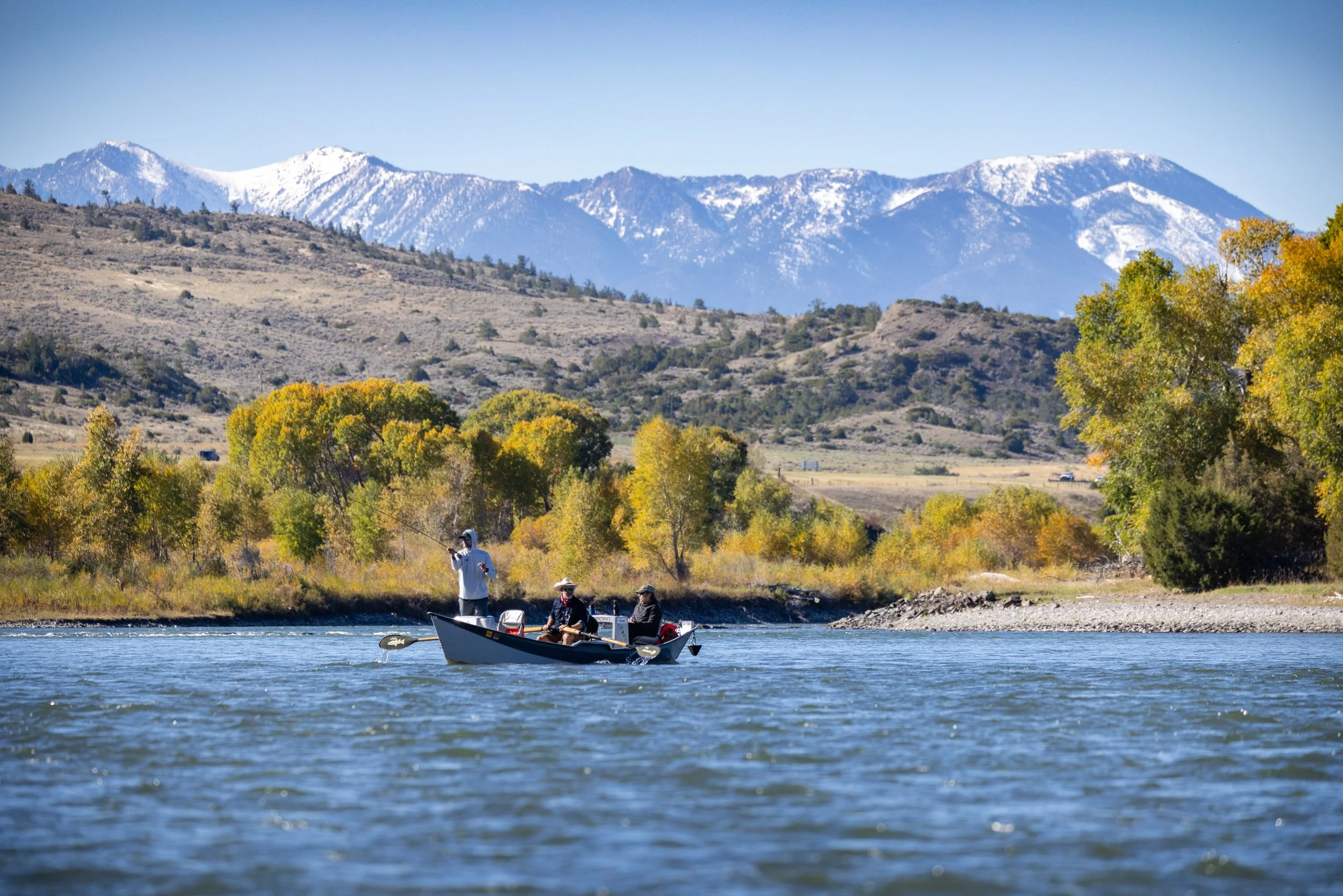
Montana holds some of the finest trout waters on Earth. The Yellowstone, Madison, Gallatin, and Missouri rivers offer blue-ribbon fishing that draws anglers from around the world. But their therapeutic value extends far beyond fish.
The Gallatin River originates in Yellowstone National Park and flows through seventy-five miles of pristine canyon and meadow water. The same river where Robert Redford filmed "A River Runs Through It" now serves as a classroom for veterans learning that fly fishing requires something they haven't felt in years: the ability to be fully present without hypervigilance.
Standing in cold, clear water with mountains in every direction, veterans discover something unexpected. The river demands attention—to the fly, the current, the fish—but it's a different kind of attention than combat required. It's focus without threat assessment. Alertness without adrenaline. Presence without survival stakes.
One veteran who participated in a Montana fly fishing program described catching his first trout as "holding onto my struggle." When he released the fish—following the catch-and-release ethic these waters require—he felt something shift. "Once I caught that struggle and released it," he said, "it was a very emotional moment for me. From that point on, I was hooked on fly fishing." The program was Warriors & Quiet Waters.
Warriors & Quiet Waters brings post-9/11 combat veterans to Montana because the landscape itself accelerates transformation. Our Built for More program combines immersive outdoor experiences with structured personal development over six to twelve months. See the verified results.
The Elements Working Together
Montana's therapeutic power isn't any single element—it's the combination. Research on restorative environments identifies four key qualities that facilitate recovery:
• Being away: Physical and psychological distance from ordinary demands. Montana's remoteness creates genuine separation from daily stressors.
• Extent: A sense of scope and coherence that allows immersion. The uninterrupted landscape creates what psychologists call a "whole other world."
• Fascination: Engaging stimuli that hold attention effortlessly. Rivers, wildlife, changing light, and mountain weather provide endless soft fascination.
• Compatibility: Match between the environment and the person's purposes. Montana's terrain resonates with veterans' training and physical capabilities.
This last point deserves emphasis. Veterans often struggle in conventional therapeutic settings not because therapy doesn't work, but because clinical environments feel incompatible with their identity as capable, action-oriented individuals. Montana's challenges—wading cold rivers, hiking mountain trails, reading water and weather—align with skills veterans already possess. The environment respects their capabilities while creating space for growth.
The VA has recognized this compatibility. Veterans who participate in outdoor recreation programs report that activities like fly fishing "play to veterans' strengths: They're used to having a mission, navigating risk, and working with a team." The goal-oriented nature of outdoor pursuits—hike to this summit, catch fish in that run—provides structure and purpose that clinical settings often cannot replicate.
Community in the Wilderness
Perhaps Montana's most powerful therapeutic element isn't the landscape at all—it's what the landscape enables between people.
Military service creates bonds forged under extraordinary circumstances. When veterans return to civilian life, they often describe feeling disconnected from communities that don't understand their experience. Traditional social settings can feel exhausting—too much small talk, too many people who can't relate.
Montana's wilderness creates different conditions for connection. Conversations happen while wading a river together. Trust builds through shared challenge. Vulnerability becomes possible because the environment itself—not eye contact or direct questioning—holds everyone's attention.
"Every piece of research I've ever done, when I ask them what it is about the program that they find helpful, it always comes down to the staff there and the camaraderie of the other participants," explains Jessie Bennett, a researcher who has studied therapeutic fishing programs. The outdoor setting creates what she calls a "safe space to talk"—vital for veterans dealing with social anxiety that often accompanies PTS.
The wilderness strips away pretense. It doesn't care about rank or resume. It responds only to presence, effort, and respect. In that environment, veterans find each other—and often, themselves.
Why Donors Should Care About Location
If you're considering supporting a veteran-serving organization, you might wonder: Does it really matter where programs happen?
The research suggests yes. Nature-based interventions show particular promise for veterans who haven't responded to conventional treatment or who avoid clinical settings altogether. Less than half of returning veterans who need mental health treatment receive it—largely because of stigma and the mismatch between clinical environments and veteran identity.
Organizations that leverage natural environments aren't offering "soft" alternatives to real treatment. They're offering doorways that veterans will actually walk through.
Montana-based programs benefit from natural advantages that maximize every donated dollar:
• Access to world-class wilderness without facility costs: Public and private lands provide therapeutic settings that would cost millions to construct.
• Natural awe delivery: The landscape produces therapeutic effects automatically—no expensive interventions required.
• Community formation: The environment facilitates peer connections that sustain healing long after programs end.
• Skill transfer: Veterans learn fly fishing, outdoor skills, and nature connection they can practice anywhere for life.
When you support a Montana-based veteran program, you're not just funding an organization. You're investing in an ecosystem of healing that multiplies impact in ways impossible to achieve in conventional settings.
Warriors & Quiet Waters has served over 1,000 post-9/11 combat veterans since 2007. Our third-party verified outcomes show participants experience 4x greater sense of purpose, 2x greater likelihood of thriving, and 4x greater resilience. Learn more about our impact and support the mission.
The Quiet That Speaks
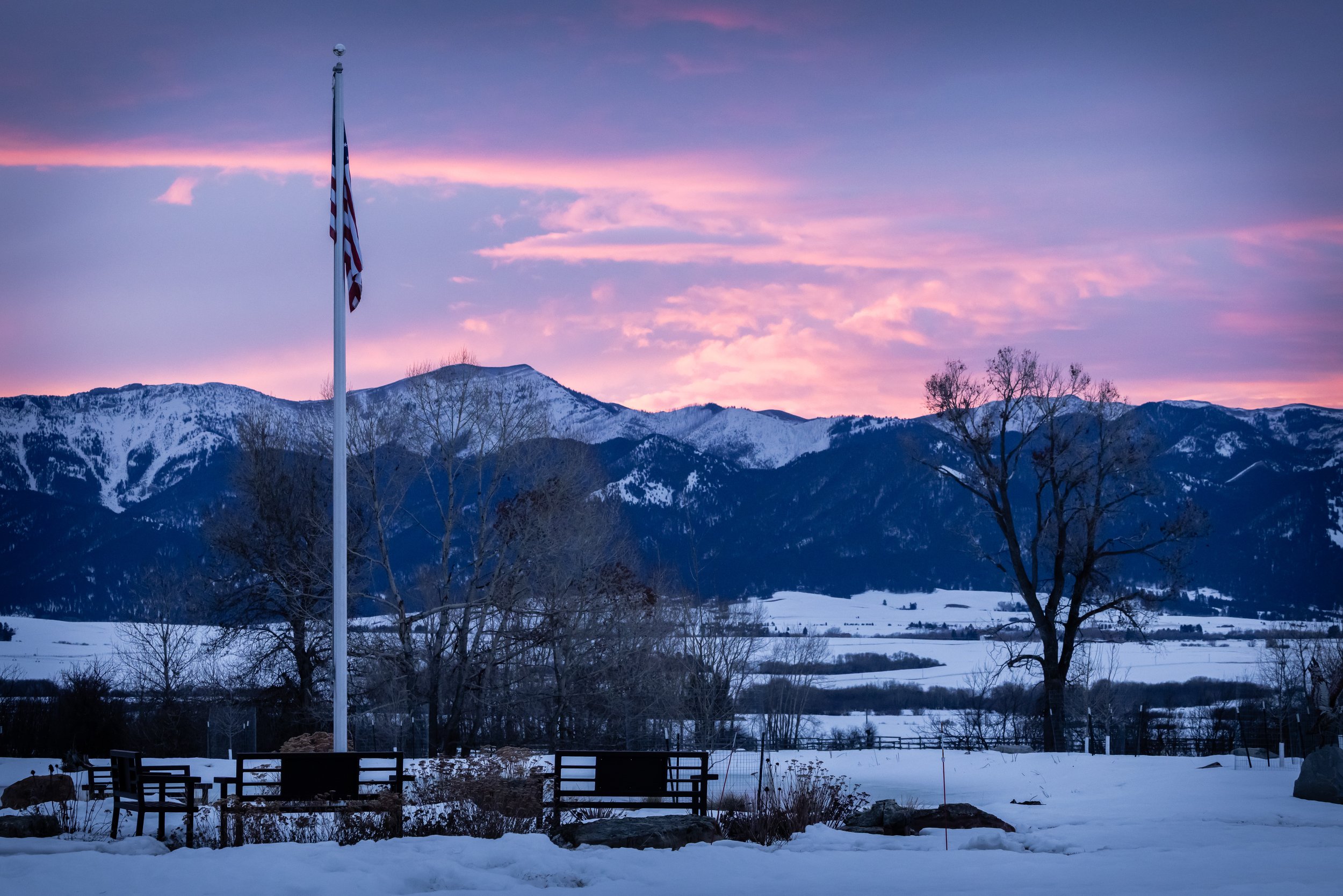
Return to that image: dawn on the Gallatin River, steam rising, mountains catching first light.
For a veteran who has experienced combat, that quiet might be the first silence that doesn't feel threatening in years. The absence of noise isn't empty—it's full of river sound, bird call, wind through cottonwoods. It's absence of the wrong kind of noise. Absence of demands. Absence of danger.
In that quiet, something becomes possible. The constant vigilance can relax. The mind can stop scanning for threats. The body can remember what rest feels like.
Montana doesn't heal veterans by itself. Skilled facilitators, evidence-based programming, and long-term support all matter enormously. But the landscape creates conditions—psychological, physiological, social—that accelerate and amplify everything else.
That's why Warriors & Quiet Waters is based in Bozeman, Montana. That's why we bring veterans here from across the country. That's why our approach treats the Big Sky landscape not as backdrop but as co-facilitator.
Because some transformations require more than programs. They require place.
And Montana delivers.
Our veterans served when called. Supporting them wisely is one way we can serve them back.